We had a lovely walk today along part of the Water of Leith, noticing particularly the yellow flowers. There are Lesser Celandines

Coltsfoot


It's lovely to see these signs of Spring all around!
We had a lovely walk today along part of the Water of Leith, noticing particularly the yellow flowers. There are Lesser Celandines
A few months ago, we watched Solar System, Professor Brian Cox's excellent BBC series, which offers a fascinating look into some of the most recent scientific discoveries about our nearest neighbours in space. It's well worth watching if you can, it's available on the BBC I-player, for anyone who can access that.
Soon after finishing watching the programme, I picked up a second hand copy of 'How I Killed Pluto and Why It Had it Coming' by Mike Brown.
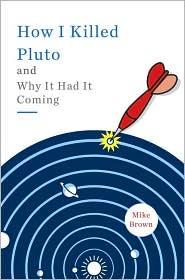
This is an excellent and informative book about the author's search for possible new planets at the outer edge of the solar system. It's a chatty, engrossing peek into the life of an astronomer, the tedium of scanning loads of photos looking for likely new planets, the excitement of finding a likely candidate and the controversies that take place when different teams of astronomers clash. It also offers insights into how new bodies in the solar system are categorised and named, and looks into the debate over whether Pluto should remain a planet or be demoted (spoiler for those who don't know, Pluto is no longer considered a planet!) Alongside the author's research, we're given insights into his family life, including the early years of his daughter's life (who showed early signs of being fascinated by astronomy!)
This is a very readable book and definitely recommended for anyone interested in how astronomy actually works.
How I Killed Pluto and Why it Had it Coming (2012) by Mike Brown, published by Spiegel and Grau.
You can read about Mike Brown's involvement in the search for a ninth planet in the solar system in Shannon Stirone's article The Hunt for Planet Nine on the Long Reads site.
We had a lovely walk round Corstorphine Hill yesterday. The gorse was looking beautiful in the lovely Spring weather.


As were the Scots Pine trees

.jpg)
An adventure story for children between the ages of 7-11.
Taylor discovers gardening with Aunt Nell. Then Uncle Hat says that he doesn't need to do any gardening to get a great harvest. Taylor is intrigued and goes on a mushroom hunt with Uncle Hat, who says:
“This is the perfect time of year to go mushroom hunting. The ferns are popping out of the ground,
the mayapples’ little umbrellas just opened, and we’ve had three warm days in a row.”
Uncle Hat teaches Taylor to find the well-camouflaged morel mushrooms, which turn out to be very tasty when they are 'cut in half, rolled in breadcrumbs, and fried in egg batter'.
When Uncle Hat gets ill, Taylor shows other family members how to forage for morels. Unfortunately they get too enthusiastic and take too many of the mushrooms. It's many years before Taylor sees a good crop of morels in the forest again.
This is a lovely story about a child discovering the beauty of nature and learning the lesson, vital for any foraging, to not take more than your fair share of nature's bounty.
The story is followed by a series of questions to get the reader thinking about the content.
The book is beautifully illustrated by Ukrainian artist, Deylik Larisa.
The Mystery of Mushroom Valley by J. David Holt.
**
Disclaimer: I was sent a free pdf of this book in return for an honest review.
**
Meanwhile, thanks to the editors of Femku magazine for including two of my haiku in the latest issue. You can read the whole issue here.
We've seen signs of Spring over the past few weeks, but this week it has really felt like Spring at last. We had a lovely walk round Arthur's Seat today. Early on, the air was slightly misty, which made for atmospheric views.


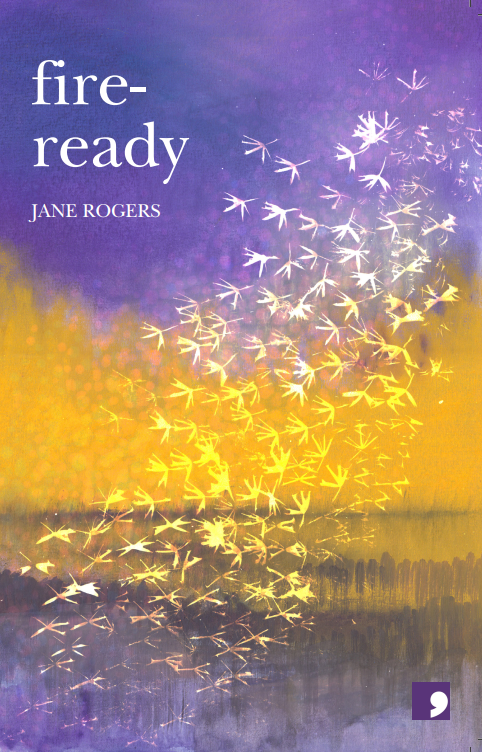
The stories in Fire Ready share some preoccupations with those in He Used to Do Dangerous Things, including climate change, social action and family relationships. Beyond that I'm not intending to compare the two books, they're both equally well worth your time.
Set in Australia, the title story Fire Ready is a moving and increasingly relevant tale of trying to prepare for the coming wildfires, in which Kayla finds adversity bringing her closer to her neoghbours.
Orbiting a future, lifeless earth, Hope shows Hope and her partner discussing whether to let their fellow crew members know that they've noticed signs of life returning to the planet.
The Quick Child is a little contrived but somehow works beautifully. Three characters are separately each surprised by seeing a young boy climbing through a hedge. This shared experience helps the three come closer and rethink their relationship to each other.
In Weeping Beech, Angus (82), who used to work for the council's parks and cemeteries department chains himself to a weeping Beech tree to protest its proposed removal. 'He thinks of all the trees he's planted and looked after. This is the first he's had to bodily defend'. But can he save it?
Primrose follows Rose on her birthday. She starts out annoyed by her husband buying flowers that she's told him she doesn't want and her cat bringing her a dead mouse. However, by the end of the day, an encounter with an enthusiastic young couple has helped her to reassess things and to even see the dead mouse as her cat's attempt to give her a birthday gift.
In The Night Before, Szandra, a reluctant eco-activist lies in bed thinking about the ethical pros and cons of a high profile action against private jets that she's to be involved with the next day. The story raises the question of how far should be go to protest the ecological damage that we see all around us and presents us with an interesting version of the Trolley Problem.
Wilf had cared for his wife Ruth in her final months. Now, in Letting Things Go, he's coping with life after her death and finding himself rediscovering a childlife sense of wonder and sensitivity to the world. 'The image of his grandson, sitting on the blue plastic gym mat, not yelling, but beaming at the world which is all part of himself and has not harmed him, pleases Wilf mightily. One baby is as big as the world: this seems to contain many truths'.
The real stand out story for me is Murmuration. Two spaceships have returned from their explorations, one having been significantly delayed. Their findings, when put together form a portrayal of human hubris and a powerful argument for the need for proper ecological understanding. Anyone who cares about the future of nature can't fail to be moved by this story.
This is an excellent collection of socially engaged fiction, that is readable, moving and entertaining.
Fire Ready by Jane Rogers, published (2024) by Comma Press.
Disclaimer: I was sent a free copy of this book in return for an honest review.
We had a lovely weekend visit to Linlithgow, just a short train ride away from Edinburgh. Linlithgow is famous for the Palace, which was the birthplace of Mary, Queen of Scots. It's also famous for the Loch, which is a great place for birdlife and offers a lovely circular walk, which is what we did on Saturday.
One of the first birds we saw on the Loch was this male Tufted Duck, looking very smart in full breeding plumage. There were lots of Tufted Ducks on the Loch in fact.

Several Cormorants were hanging around the edges of the Loch, here are just two of them


The Palace seems to have been half covered in scaffolding for several years now, but it's still an impressive sight

The Blackthorn is out in bloom, which is lovely to see


