Showing posts with label campaigning. Show all posts

Tuesday, 15 October 2024

Rescue Me! Recycle Week 2024

For 21 years, Recycle Week has been celebrating recycling and encouraging people to recycle as much as they can. This year's theme is 'Rescue Me' which aims to rescue recyclable items from ending up in landfill. 

If you have any items that you don't want, think first, can you re-use it? Could you:

* sell it on line? 

* donate it to a charity that would directly use the item in its work? 

* give the item to someone you know?

* donate the item to a second hand shop?

If you can't use the item in any way, and it couldn't be sold in a charity shop, then find out how it can be recycled in your local area. (Different places recycle different things in different ways, contact your local council to find out what happens in your area).

As regular readers of this blog will know, I am committed to re-using materials in the crafts I make. I buy craft supplies from second hand shops, my particular favourite being bags of unsellable jewellery, which include broken items that can be taken apart, and the pieces used to make new items. 

I'm currently clearing out the house of a close friend who died recently. It's a sad task, but I'm trying to make sure as much of her belongings get re-used as possible. I'll be writing about that in tomorrow's post on the Crafty Green Poet Substack


Friday, 7 June 2024

World Swift Day

Edinburgh today is full of young people dressed in sparkly outfits and cowboy hats, piling onto the buses and trams to get to Murrayfield to see some pop star in concert, so it may be tempting to think that World Swift Day is something to do with said pop star. 

But no, World Swift Day is a chance to celebrate Swifts and to help conserve these amazing aerobatic birds that visit the UK every year. 

As I posted here a few days ago, Swifts have arrived back in our local skies, but apart from a flurry of about five or six a few days ago, I've barely seen any. I remember the days when we would regularly see 20 swifts flying above our street. Swifts have shown a huge decline in the past decade or so across the UK. 

One way of helping is to put up a nest box (as we did a few years ago, when we last had roofing work done). Another thing that everyone can do, is to raise awareness of the perilous situation of these lovely birds. A certain pop star who shares the same name as these birds might be able to raise awareness at tonight's show in Edinburgh, so I was cheeky enough to tweet her today, which will probably have no effect whatsoever, but it's worth a try.


Monday, 3 June 2024

Buttercup Meadows

 Buttercup meadows are at their best at this time of year, particularly when the sun shines and the flowers glow in the light. Here are photos from two buttercup meadows in the Dells alongside Edinburgh's Water of Leith.


The Big Meadow Search runs 1st June to 31st August across Britain, Ireland and the Channel Islands. Any type of unimproved grassland can be included and everyone is welcome to join in. You can find out more on their website here

I may well do a survey of the meadow in the top photos for the Big Meadow Search. The meadow in the second photo is too marshy for me to feel comfortable wandering around in! 

For 30 Days Wild.


Thursday, 7 March 2024

Campaigning on Plastic

Plastic waste is a big issue, littering places across the world, making towns look untidy and damaging nature. Plastic is generally made from fossil fuel products, so also indirectly adds to the climate crisis. 

Almost 100 billion pieces of plastic packaging are thrown away by UK households every year, and only 12% of that is recycled. 

We often don't have a choice about our plastic use, often there is no alternative to plastic packaging for everyday essentials. I'm committed to reducing my plastic use, but in the past few years three refillery shops in my part of Edinburgh have opened and then closed again. These shops offered customers the chance to take along our own containers and fill them up with the products we want - from beans to washing up liquid. There are still some shops in Edinburgh offering that service, but now I have a much longer journey to refill my containers.

So what can we do? 

March sees two campaigns on the plastic crisis. 

First up is the Big Plastic Count, which is happening between 11-17 March 2024. For this week, we are being encouraged to count how much plastic we throw away (whether we put it in the recycling or into the landfill). You can take part as a household or get your school, community group or business involved. You can sign up here.

In 2022, almost a quarter of a million people took part in The Big Plastic Count and revealed that almost two billion pieces of plastic packaging are being thrown away in the UK every week. This year, the campaign hopes to provide even more evidence to convince UK government ministers to lead the way at the Global Plastic Treaty negotiations that could phase out plastic pollution.

Following on from the Big Plastic Count is the Spring Clean Scotland campaign, which will take place between 15 March - 28 April. This year's themes for #SpringCleanScotland are Nature, Communities, Health & Wellbeing and Marine Litter. To join in you can:

  • Organise a litter pick in your community.
  • Join a public litter pick.
  • Complete a Litter Survey.
  • Help spread the message and get more people involved. 

Find out more here.


Sunday, 7 January 2024

Winter Sunshine and lots of Birds at Musselburgh

 We had a lovely walk at Musselburgh yesterday, walking along the River Esk to the Firth and Forth and then continuing on to the bird hides at Levenhall Links. The sun was shining, though it was very cold. 


We saw lots of birds, as one does along this route at this time of year! Highlights include: 

Long Tailed Duck, we saw six of these sea ducks, the females don't have tails

Lapwings - we saw about 50 of these beautiful birds that are sadly declining in number across the UK

Bar Tailed Godwit (to the left in the photo below) and Oystercatcher (to the right) were both present in good numbers along the shore 

Turnstones were running around on the rocky shore 

and there were a lot of Goldeneyes (the photo below shows a male)

and here's a female Goldeneye 

Musselburgh is always a great place to go birding. There are plans to build flood prevention structures along the River Esk and birders (and others) are concerned about the negative impact these works will have on nature. Of course, the town needs to be protected from rising sea levels, but the proposed plans seem pretty extreme. You can read about the flood prevention scheme here. You may be interested in Pause the Flood Scheme, which aims to find a responsible, nature based approach to flood prevention for the town.

Tuesday, 28 November 2023

Time to Sign up for Twelve Days Wild

 The Wildlife Trusts have launched their 12 Days Wild campaign! 

Thousands of people across the UK will be brightening up their winters by signing up for 12 Days Wild and doing something wild on every one of the twelve days of Christmas. 

Why not sign up to join in and do one wild thing every day from 25th December to 5th January? You’ll receive daily inspirational emails jam-packed with fun ideas to help you connect with nature and lift your mood.

Spending time in nature can help you feel happier and healthier. You can join in by walking in the park, watching a starling murmuration or making a piece of art inspired by nature.

Or you could choose to take action to help nature, for example, you could go plastic-free for 2024, recycle your Christmas cards, feed the birds or volunteer at a local nature reserve.

Find out more about 12 Days Wild and sign up here

Wednesday, 18 October 2023

Waxcap Fungi

Waxcaps are the most beautiful fungi, coming in all colours, including green, a very unusual colour for fungi, but a colour found in the Parrot Waxcap (I found the one below in Edinburgh's Colinton Cemetery two years ago when I was carrying out wildlife surveys of our cemeteries)

Waxcaps are an indicator of rare, species-rich grassland. If we can identify where waxcaps and other grassland fungi thrive, we have a better chance to pinpoint where fragments of ancient meadows survive, so we can protect them for the future.

Ancient grasslands are vital for the fungi and wildflowers they can be home to, and are also crucial in the fight against climate change. Species-rich grassland can store up to a third more carbon than areas with just a few species. This is one reason why trees shouldn't be planted everywhere, any grassy area needs to be assessed for the species it already has before trees are planted. In many cases, trees should NOT be planted on grassland. 

Britain is home to some of the most important waxcap grasslands in the world. However many species are becoming rare and declining; they need identifying and protecting. 

This autumn, the charity Plantlife is once again looking for people to find and record waxcaps. Find out more and take part here.


Friday, 1 September 2023

Second hand September - what really happens to clothes donated to charity?

This month is Second Hand September, a chance to highlight the value of buying second hand, focussing on clothing. When you shop second hand and donate unwanted clothes to second hand shops, you reduce waste, take a stylish stance against climate change, and help create a fairer world.

However, only as little as 20% of donations may end up getting sold in the shop. Many donations end up in countries in the global south, where there is big trade in second-hand clothing. Once in those countries, again there is no guarantee that the items will be sold, and mountains of unwanted clothing litter places from the Atacama Desert to rubbish dumps in Africa. 

This article, on the Guardian newspaper website, highlights how creative entrepreneurs across the world are using waste clothing to create their own highly sought after products, including children's toys, home textiles and shoes. 

The African country of Ghana imports around 15m items of second-hand clothing each week - read more in this article on the Guardian website.

Buying second hand is of course good, because you are genuinely reducing waste by re-using things. Donating is also good for the same reason. The problem lies in what happens in between. Many people buy clothing and wear an item only once for a party or for a photo to share on social media. Then these items are donated to charity, or even worse, thrown away. To make things worse, many clothes these days are poorly made and don't last long, even if you wanted to wear the same item to several parties or a whole series of social media posts.

So, even better than buying only second hand clothing this month, can you actually go all month without buying any clothing? And if you do need to buy new clothes, buy fewer items and make sure they're good quality. And think about how to make your clothing last longer: 

If your shoes get worn down, can they be repaired? (There aren't so many cobblers around these days, but if you can find one, use their services and make your footwear last longer). 

If a button falls off, sew it back on.

If a zip fails, replace it if you can or get a local repair shop to replace it (there may well be more clothing repair shops now than there used to be, there are certainly several in Edinburgh). 

If an item rips, consider creative ways of patching it up. 

If an item no longer fits, can you alter it, so it does fit? (Again, either do this yourself or take it to a clothing repair shop). If you can't alter it, and it's still in good condition, then donate it to charity.

If an item is no longer in good enough condition to wear out, where it around the house until it falls apart, and then use the cloth as rags.

How about upcycling fabrics? Here is a tweet from Oxfam (one of the UK charities that has a lot of second hand shops) showing how one of their volunteers upcycles fabrics into clothing.

The Or Foundation (Strap-line "Too much clothing. Too little justice") is a charity that works in Ghana and the USA to campaign on reducing clothing waste and move towards a circular economy.

**

Second Hand September is all about celebrating second hand clothing! Can you commit, for the whole month, to buying only second hand clothes? And don't forget to donate your pre-loved items! Find out more about Second Hand September here and sign up to take part here.  

**

If you're interested in issues around clothing, you may be interested in the thought-provoking Fashioning the Future report from the War on Want charity 

Remember, click on the coloured text to go to other websites where you can find out more!


Monday, 21 August 2023

Cast your Vote for the Woodland Trust Tree of the Year!

Every year, the Woodland Trust runs a competition to find the Tree of the Year in the UK. Trees are nominated for their age or importance, in some cases their historical importance, in others because they have been threatened with destruction and the local community has rallied round them. The winner will represent the UK in the European Tree of the Year competition!

Voting is open until Sunday 15 October, and this year's winner will be announced on Thursday 19 October.

Find out more and cast your vote here


Monday, 14 August 2023

Coming Soon! Second Hand September

When you shop second hand and donate unwanted clothes to second hand shops, you reduce waste, take a stylish stance against climate change, and help create a fairer world.

Apart from underwear and shoes, I always buy second hand clothes. Not just clothes either, most of my books are second hand (though I like to buy new books when they are from small, independent publishers) as are many of our household items. Most recently, an old pedal bin broke. A bin isn't something I would normally think of buying second hand, but none of the local hardware shops had any bins and I found myself buying a bin from a local second hand shop. It's in excellent condition too.

Second Hand September is all about celebrating second hand clothing! Can you commit, for the whole month, to buying only second hand clothes? And don't forget to donate your pre-loved items! Find out more about Second Hand September here and sign up to take part here

Finally, here are some other ways to reduce the impact of your own clothing. Here are just a few:

  • Avoid fabrics with a high environmental footprint, such as non-organic cotton, leather and synthetic fibres

  • Choose organic cotton and other natural fabrics that are produced without toxic chemicals

  • Choose brands that are taking steps to reduce their environmental impact

  • Wash your clothes less often and only at 30 degrees

  • Buy less, choose well and make it last

Tuesday, 20 June 2023

The value of Grasslands


 Recently, there has been a call to plant more trees in our local area. (Which is much needed, given how many trees, (including the whole of Sauchiebank Woods) have been destroyed to make a new cycle-path.)

There has been less than subtle pressure from some quarters that the North Merchiston Cemetery Friends Group should plant loads of trees in the grassland areas of the cemetery. 

This ignores the fact that semi-natural grassland, such as found in the cemetery, is a fairly rare habitat, particularly in our local area. These types of grasslands support a range of plants and fungi that would be lost if the area were to be turned into woodland, Common Spotted Orchid and Parrot Waxcap fungi to name just two. The more common species found in the cemetery grassland, such as the White Clover pictured above, support a range of insects and birds, contributing to the rich biodiversity of the cemetery. 

Grassland butterflies across Europe declined 36% in the decade 2010-2020 (see this article). This inderlines the importance of species rich grasslands for insect biodiversity. 

The biodiversity crisis we're living through is as urgent as the climate crisis, but too often all attention gets paid to the latter. However, research shows that grasslands are themselves valuable as a potential natural solution to climate change: 

"Species-rich grasslands are huge carbon stores and when managed carefully they lock in carbon and boost biodiversity. 

Grasslands have a huge potential for locking up carbon, not only due to the plants we can see on the surface, but also due to the relationships between the plants, fungi, bacteria and many other species which help enrich the soil with carbon."

This quote comes from the Wildlife Trusts' website, you can read the whole article here

So, grasslands and woodlands are both valuable habitats and just as we shouldn't be destroying woodlands to build cycle-paths, nor should we be converting species rich grasslands to woodlands.

For Nature Notes.

Friday, 12 May 2023

Orwell's Roses by Rebecca Solnit


Rebecca Solnit is a writer who is always interesting, whether she's writing about walking, feminism or other social issues, though I will admit to not always liking her writing style. (I've read a few of her books but inexplicably, seem not to have reviewed them on this blog!).

A friend recently lent me Solnit's latest book Orwell's Roses, which uses George Orwell's love of roses and gardening as a way into covering not only aspects of his biography but also issues as varied as rose cultivation and totalitarianism. 

Orwell is well known as the author of 1984 and Animal Farm and his love of nature is often unacknowledged, though as Solnit points out, becomes apparent with a close reading of works such as 1984. Even his very name reflected his love of nature, when Eric Blair decided on his pen name, he chose Orwell, the name of a river in Suffolk, close to his parents' home.

Solnit's journey starts as she visits the garden of the cottage in rural Hertfordshire where Orwell lived for some years. From here, she examines Orwell's own love of nature and the symbolism of roses and flowers in general, taking apart the view held by some social activists that flowers are trivial. Orwell himself argued for people to be able to enjoy life alongside the need to overturn repressive political structures. Solnit discusses the degree to which our relationship with nature is political, and becoming increasingly so in this era of nature depletion and climate chaos. She also argues for the need for art that is not directly political, but that which offers a much-needed sustenance and solace for activists and indeed all of us in our everyday lives.  

From here, Solnit also looks at injustices in the flower trade. She travelled in Colombia, where a flower industry (mostly supplying consumers in the USA) was first started as a replacement for the coca trade. And it is an industry, with millions of roses being produced every year, with detrimental effects on both the local environment, including depleting the groundwater, and the workers' health and rights. The flower industries in Kenya and Ethiopia (producing flowers for European consumers) are similarly detrimental. Of course these are not the only "things that look beautiful and are produced through hideous means" as Solnit says: "I have often thought of this disconnection as a lack of integrity that's pervasive in modern life".

She also touches on topics such as mining coal (which is of course the long dead remains of prehistoric plants) and takes long digressions, including a chapter on the writer Jamaica Kincaid who wrote about flowers from the point of view of an expert gardener and who considers the impact of colonialism on botanical science. I enjoyed these digressions, finding them interesting explorations of related topics, but, judging from some of the reviews of this book on Goodreads, some people just find these digressions annoying.

Orwell's Roses by Rebecca Solnit, published (2021) by Penguin Random House


Tuesday, 2 May 2023

May - Walk but Don't Mow!

May is National Walking Month! If you already walk a lot, this is the ideal time to get out and about and enjoy the great outdoors in, hopefully, the lovely Spring weather. If you don't walk much, then this is the ideal time to start! You can find out more about the benefits of walking and tips for how to include more walking in your daily routine, then the Living Streets website has lots of ideas! Their main campaign is to try to inspire people to walk for 20 minutes every day during May! 

Today I walked through the Dells alongside the Water of Leith, doing my weekly river patrol.  There are lots of wildflowers in bloom at the moment, including these lovely Red Dead Nettles, Forget-me-nots and Dandelions. 

The Wild Garlic (Ramsons) are starting to bloom

as are the buttercups

bluebells (some native bluebells and some that are hybrids between native and Spanish bluebells)

and a small patch of Greater Stitchwort 

If you have a garden, you might want to consider allowing a small patch to grow wild, you might get flowers like those above appearing amongst the grass! If so, you may be interested in No Mow May! This is a call to leave your lawn to grow throughout the month, allowing flowering plants to flourish in amongst the grasses. A richer variety of flowering plants will support a greater range of insects and other invertebrates, which in turn will support a range of birds and mammals. Trevor Dines (Trevor the Botanist) has an excellent thread on Twitter, about how having areas of both short grass (cut regularly) and long grass (cut once a year in Autumn) in your garden is ideal for wildlife. He also gives tips on how best to manage this.

Thursday, 16 February 2023

Should we Destroy Woodland to build Cyclepaths?

Apparently Edinburgh's Sauchiebank Wood has now been basically entirely destroyed to make way for a cyclepath. Those of us who have protested against this destruction are particularly upset about this. We really need to stop destroying nature for the sake of infrastructure. 

Local information boards about the cycle path claim it will 'revitalise underused greenspaces' whereas what has happened is an underappreciated green-space seems to have been entirely destroyed. (I haven't seen the site as it currently is, I'm relying on Crafty Green Boyfriend's observations from when he passed by earlier today).

This is how the woodland looked back in 2020 when I visited it to highlight the threat the cycle path posed to this small woodland. It was a lovely area of trees.


Back in December 2021, I blogged about the planned cycle path and protests against it here and here. There's also a blogpost on the Trees of Edinburgh site. The protests were obviously unsuccessful. Apparently, according to this tweet from Edinburgh tree campaigner Andrew Heald, city councillor Val Waker yesterday said: “It is really important that we look after Edinburgh’s wonderful tree legacy for future generations.” So the question needs to be asked, why are we chopping down perfectly healthy trees to make way for a cycle path? 

Cycling is a green form of transport (though the ever increasingly popular electric bike is far less eco-friendly than a traditional bike) but that shouldn't justify destroying woodland! Also, just because few people visited the woodland doesn't mean that it wasn't valuable. It provided a home for insects and birds and a much-needed green oasis in a built-up area.

Saturday, 7 January 2023

Blackford Pond and Midmar Paddock

 We had a lovely walk today starting at Blackford Pond, which is currently badly flooded. The pond doesn't have a natural inlet or outlet and is entirely artificial, it has long had occasional problems with its drains, which is what must be happening now, made worse by the high rains we've had recently. 


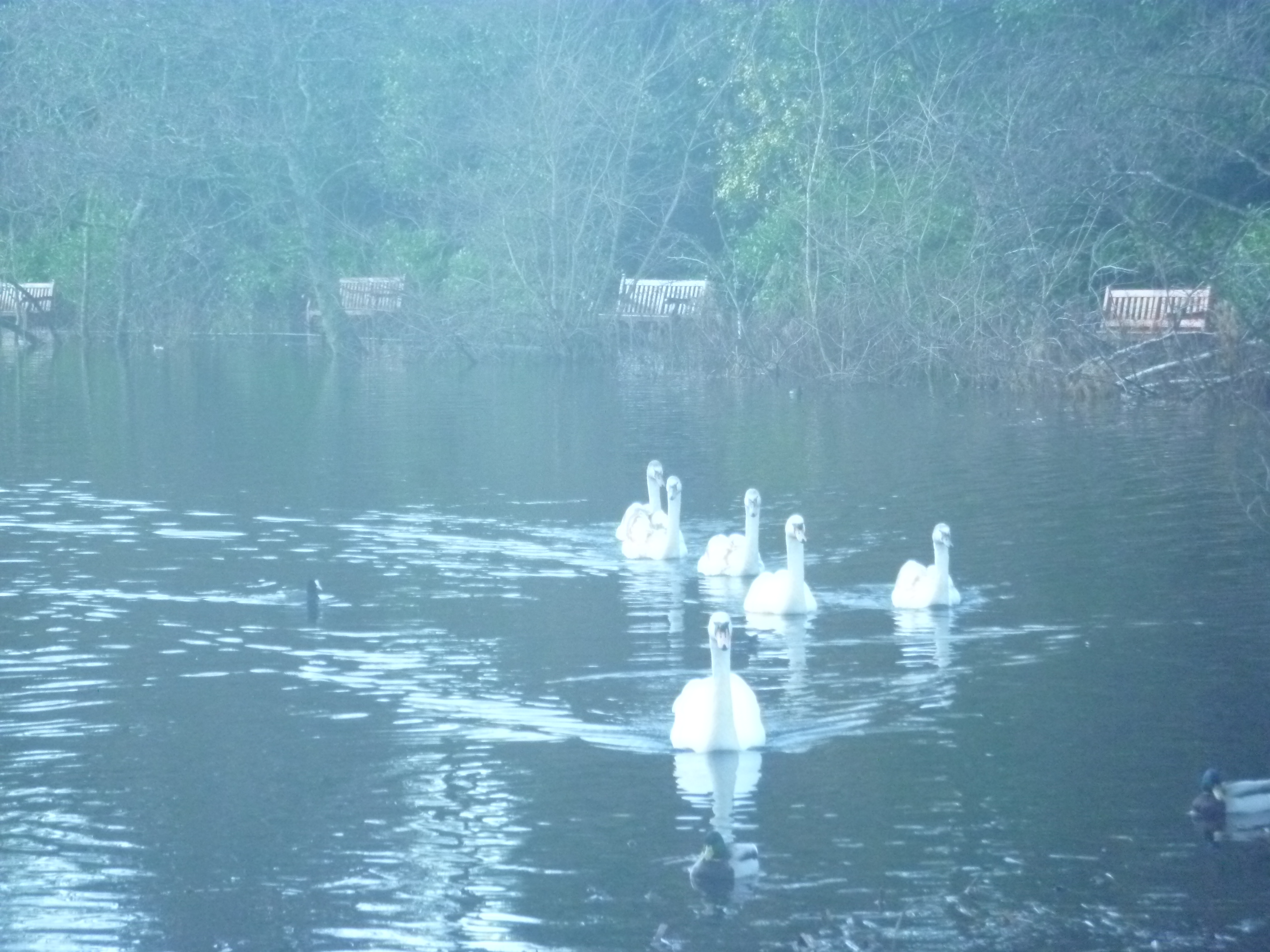
The resident Mute Swan family seem happy enough


From Blackford Pond we walked through Midmar Paddock. We had a wonderful encounter with a female Sparrowhawk, who landed on a branch right in front of us, then dashed away to hunt birds in the paddock. No photos, but it was amazing to see. Here are some photos of the paddock, which is sadly currently threatened with development. 


You can find out more about the Friends of Midmar Paddock's campaign to save the area from development on their new website or by following them on Twitter or on Facebook

The paddock is at the foot of Blackford Hill which is beautiful to look at in the winter sunshine.


Yesterday we got a lovely view of this Fieldfare, which, unusually for this species, was eating a worm! 


Tuesday, 20 December 2022

Biodiversity COP 15

Biodiversity COP15 has just finished and governments have adopted the Kunming-Montreal Agreement. This is great news, but is only the start!

In many ways, all the COPs are just talking shops, and it's confusing that the Climate Change COP and the Biodiversity COP happened this year close together, but are numbered so differently. Climate Change COP26 happened earlier this year in Glasgow, Biodiversity COP15 has just ended in Montreal.

So, a quick definition: the 15th Conference of the Parties to the United Nations Convention on Biological Diversity, or COP15, was the recent meeting in which the nations of the world came together to discuss the world's biodiversity. You can read about the history and background to the Biodiversity COPs on the website of the Natural History Museum, here.

The Kunming Montreal Agreement commits the world to ending and reversing biodiversity loss by 2030. It aims to conserve at least 30% of land, freshwater habitats and ocean globally, while respecting the rights of indigenous peoples and local communities.

Obviously, words aren't enough! All the commitments to conservation and protection is just empty rhetoric if not followed by concrete actions. And concrete actions can't happen without money, so it's good that governments committed to eliminate subsidies harmful to nature, and to substantially increase the level of financial resources available for nature conservation from all sources by 2030. Beyond funding though, countries across the world will need to draw up plans for how they are going to conserve 30% of their territory and reverse biodiversity loss by 203.

So this is a great start, but action is needed to make these grand ideas into reality, and action needs to start now.

Links:

The Guardian Newspaper's Comment on COP15.

The Guardian Newspaper's Summary of What Was Agreed at COP15

BBC Report on COP15

Five key Takeaways from COP15 (BBC website).

World Wide Fund for Nature's Press Release about the Kunming Montreal Agreement.

The full set of documents relating to COP15.

Friday, 18 November 2022

Coming Soon - National Tree Week

skeleton trees at Rouken Glen Garden centre

National Tree Week is the UK’s largest annual tree celebration. Every year, conservation organisations, friends of greenspace groups and individuals plant thousands of trees to mark the start of the annual tree planting season.

Organised by the Tree Council, this year's National Tree Week (NTW) will take place from 26 November to 4 December! The week will focus on the Hidden Connections that are so vital to the life of trees – including roots, soil and fungi to highlight the world of complex activity happening beneath the ground.

The Tree Council will hold two Tree Talks during National Tree Week:

On Monday, 28 November at 7pm, The Tree Council’s Director of Trees, Science & Research, Jon Stokes will be joined by Chartered Arboriculturist and President of the Institute of Chartered Foresters, Sharon Durdant-Hollamby to Demystify the Tangled World of Tree Roots.

On Thursday, 1 December at 7pm, Professor Martin Bidartondo, will join Tree Council CEO, Sara Lom for a discussion:Trees and Fungi Working Together – A Remarkable Relationship.

While trees are wonderful plants, it is important to emphasize that the right trees need to be planted in the right places. All too often, over-enthusiastic groups destroy areas of valuable scrub or species rich grasslands in the bid to plant trees. If you are planting trees for this year's National Tree Planting Week, please check that the area where you are planting, is not already a valuable wildlife habitat.


Thursday, 17 November 2022

Artworks on the National Cyclepath Network

Sustrans Scotland, the charity for sustainable transport, is currently marking Disability History Month with a series of art installations by disabled artists. The installations are in Paisley, Dumfries and Edinburgh. You can find out more about the project here

Today I visited one of the installations at lunchtime. I popped along to the Warriston section of the Water of Leith Walkway to look at the installation by Sasha Saben Callaghan. Her beautiful collages 'take the histories of six disabled 'pauper inmates' from Leith's Poorhouses and transforms their stories into the mythical, the beautiful and the uncanny'. 


It's well worth popping along to see these lovely collages, though I was disappointed that they were relatively small, There's so much detail in the collages themselves that they would have looked even better if they had been reproduced at a larger size. You can see more of Sasha's artwork on Instagram here and you can watch a wee video about her installation here.

This installation will be in place until 16 December. 

Sustrans nationally in the UK has a number of public artworks and art trails, you can read more about them here.  

Meanwhile, Kate Bell shares her experiences of cycling with disabilities on the Sustrans website here.


Tuesday, 15 November 2022

People's Walk for Wildlife

Note: Due to the impact of train strikes in the UK, the People's Walk for Wildlife has been postponed until Spring 2023. Read more here

Wildlife expert, TV presenter, author and activist Chris Packham, vice president of the Royal Society for the Protection of Birds, is organising the People’s Walk for Wildlife 2 to take place in London on Sunday 27th November.

The UK is facing a severe Attack on Nature. Our rivers are polluted with sewage, new oil and gas licenses are being issued, and nature-friendly farming schemes are under attack. Meanwhile, many species of animals and plants are undergoing drastic declines across the country.

The People’s Walk for Wildlife 2 will be a day for anyone who cares about wildlife in this country to gather together and to demonstrate to our elected representatives that we need action now for a more secure future for our wildlife, our planet and ourselves.

You can pledge to join the walk in London here.

If you aren't able to join the march in London, you can still make your voice heard! For example, you could create a poster with your message and then share it on social media on the day. You could write a blog post or a poem. You could write to your local politicians and talk to your friends and neighbours about the threats you see to nature.

Whether you show support in person or from your own home, you can play a crucial part in telling the UK Government it is time to act for nature.  

You can read more about the People's Walk for Nature on the RSPB website

It's not just the UK seeing an Attack on Nature. For example, read this article about the plight of bears in the forests of Poland.

Wednesday, 5 October 2022

When is Plastic Recyling not a Good Idea?

Recycling is a good thing (though not as good as reducing usage or re-using items). 

But sometimes plastic recycling means rich countries sending plastics to poorer countries that can't cope with the load. So some of the plastics we think we're recycling, end up polluting rivers and oceans on the other side of the world. Read this article and then consider asking your local council what actually happens to the plastic you put into the recycling bins. 

In addition, can you reduce the amount of plastic you use? But think carefully, some foods (cucumbers for example) keep much better when wrapped in plastic, so plastic can genuinely reduce food waste. Though if you can do small, regular shops then you are more likely to be able to refuse plastic wrapping without finding that your vegetables go off. (Every week, I buy the vegetables I think I'll need for that week and avoid plastic packaging as much as possible and I find very little food waste.) More and more shops these days allow you (or encourage you) to take in your own containers to refill, thus avoiding the need for new plastic containers.

An 'eco-friendly' canvas carrier bag uses much more energy in its production than does a single use plastic carrier bag. You need to reuse a cotton / canvas carrier bag 150 times before it has less of a carbon footprint than a single use plastic carrier. So, avoid the temptation to buy a new eco-carrier bag every time you see one advertised as supporting your favourite environmental charity / trendy arts venue / ethical shop and use the same one over and over. I have some canvas carrier bags that I've had for years. I wash them regularly and they are great!

I asked City of Edinburgh Council what happens to the plastics that I put in our local recycling bins and they directed me to this link, which explains how the council ensures that plastics are actually recycled and don't end up polluting rivers on the other side of the world.  

I also asked the Co-op what happens to the soft plastics that we put into their new collecting bins and this is the reply I received: 

"Soft plastics are collected by our recycling partner, Jayplas. The material is sorted into different polymer types and is sent on to extrusion sites in the UK where they are recycled into usable plastic pellets. Polyethylene typically is used to make bags and sacks. Polypropylene is used to make rigid items such as stacking crates, and buckets. Mixed plastics are recycled into plastic ‘wood’ which is used to make boards for the construction industry. Any contamination and non-target materials are incinerated for energy recovery".

So, if you live in Edinburgh or shop in the Co-op, you can be sure that plastic you put in the recycling bins does get recycled. If you live elsewhere, then please contact your council to find out what actually happens to the local plastic recycling.