Tuesday, 17 February 2026

Snowdrops


I love seeing snowdrops, one of the first signs of Spring every year, these are in North Merchiston Cemetery, which, just now, has more of these lovely flowers than I've ever seen before. 


Sunday, 15 February 2026

Linlithgow Loch

 Every year we visit Linlithgow Loch at this time of year, hoping to see Great Crested Grebes performing their courtship dance. Saturday was a beautiful day, though very cold, so we made the trip. 

Linlithgow Palace dominates views across the Loch 

The loch is beautiful and a great place for wildlife. We saw about three or four distant Great Crested Grebes, but none seemed in the mood for dancing. However, we were delighted to get very good views of a pair of Slavonian Grebes, rare cousins of the Great Cresteds. Adorable looking birds that we spent a good few minutes watching, though the light wasn't entirely kind for photos, but here they are, in their winter plumage (so lacking their distinctive breeding plumage).  

We were also happy to see several Tufted Ducks, the males in their smartest breeding plumage 


 The Coots were clearly annoyed about something (though this could be part of a courtship display)

and the Grey Herons were generally happy to pose for photos 

We saw lots of friendly Robins too, one of which sang to us. 

**

Edited to add: Grebes also feature in this week's post on my Crafty Green Poet Substack
 

Wednesday, 11 February 2026

Two Books about Dinosaurs

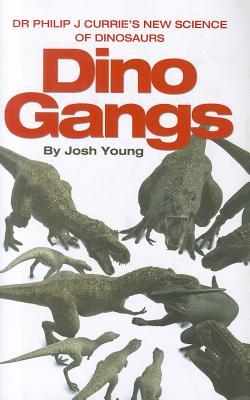
 Dino Gangs: Dr Philip J Currie's New Science of Dinosaurs by Josh Young 

Dino Gangs by Josh Young

 This is a very engaging introduction to the science (carried out by Dr Philip J Currie and others) behind the claim that dinosaurs such as Tyrannosaurus Rex, may have hunted in packs. Dinosaur finds from Alberta, Canada, and the Gobi Desert in Mongolia are studied, and insights given into how the paleontologists work, both in the field and in the lab. Predatory dinosaurs are compared to modern day ostriches, Komodo dragons and lions to try and work out how the extinct creatures may have hunted. 

The book was written to accompany a TV series and feels like it was written for teenagers, with lots of repitition to drive home the points. This probably means that it's a particularly good read for people who aren't so scientifically minded, but makes it a less satisfactory (though still interesting) read for those who have a scientific background. 

Dino Gangs by Josh Young, published (2011) by  Harper Collins

**

The Rise and Fall of the Dinosaurs by Steve Brusatte  


This is a fascinating overview of the development of dinosaurs from the first small examples that appeared so many millions of years ago to the modern feathered varieties we now know as birds. Brusatte is an enthusiastic expert in the field and gives a focussed and interesting overview of the evolution and decline of dinosaurs and the istory of paleontology as a science. He also shares stories from field trips and conferences. I found him an engaging and entertaining writer, though I know some people aren't so keen on his style. 

The science is fascinating enough to keep any interested reader gripped until the last page. Dinosaurs ruled the earth for an unimaginable length of time. I still find it astonishing that my childhood favourite dinosaurs Stegasuarus and Triceratops would never have met because Stegasaurus went extinct millions of years before the first Triceratops appeared.  The book has a bit of a focus on the tyrannosaurs (the best known of these being Tyrannosaurus Rex with its 'pathetic little arms' that are referred to possibly slightly too frequently).

Definitely a good book for anyone interested in dinosaurs.  

The Rise and Fall of the Dinosaurs by Steve Brusatte, published by Picador. 

**

I wrote about Dinosaurs and Birds in my latest Crafty Green Substack post, which you can read here.  

Monday, 9 February 2026

The Shepherd and the Bear (film review)

 The Shepherd And The Bear

This documentary explores the conflict provoked by the reintroduction of brown bears in the midst of a traditional shepherding community in the heights of the French Pyrenees. The film follows Yves, an ageing shepherd who struggles to find a successor, and Cyril, a teenage boy who spends his free time tracking and photographing the bears.

The shepherds are losing sheep to bears, which have been reintroduced into the area, with apparently little support given to the shepherds (they are given no compensation for lost sheep and the bear-scarers and electric fences they are given don't really seem adequate to the job). I love the idea of bears being reintroduced into areas where they used to live, but if I were a shepherd in that area I would expect at the very least compensation for lost sheep and sturdy electric fencing to corral the animals at nightime. The arguments of both the shepherds, the photographer and the conservationists are all sensitively presented and the audience is left with a sense that this is a conflict full of nuance and with no easy answers (well except maybe good compensation and sturdy electric fences). 

The documentary doesn't shy away from showing the bloody side of farming, including dying livestock. On the other hand, it is prevented from becoming too heavy with interludes including a wedding celebration and an extended chase scene involving a feisty rooster. 

The stunning cinematography and immersive storytelling show us a world of tradition, community and humanity’s increasingly fraught relationship with a vanishing natural world. 

Currently screening at The Filmhouse in Edinburgh and probably elsewhere, check your local independent cinema.  

Hazel Catkins

We enjoyed a walk round Saughton Park and along the Water of Leith on Saturday. We didn't take many photos as the weather was very dull. I did manage however to get some photos of Hazel bushes, which not only show the dangling male catkins but also the tiny red female flowers. Look carefully at the twig in the photo below. To the right of the catkins are two tiny red flowers. Can you see them?


Wednesday, 4 February 2026

The Coral Bones by E J Swift

This novel interweaves three stories, set around the Great Barrier Reef in Australia. One follows Judith, a young woman on a sea voyage in the mid-19th century, the second follows Hana a marine biologist in the present day, and the third follows Telma, a representative of an ecological Restoration Committee, two centuries in the future.

Judith's story is the most engaging, partly because it is an old fashioned adventure, partly due to Judith's obvious delight in finding the pristine reefs, but also because to me she felt like the most well rounded of the characters, with the most engaging voice. 

However, the present day and future stories are most valuable for what they say about the state of the coral reefs and how we might begin to save them in the future. There are some excellent descriptions of the life around the reefs: 

'Rafi had included footage of seadragons mating. Telma watched a dance between pairs, mesmerised by the slow gyre of their movement, the ritual undertaking between male and female, an act that had been staged for countless millennia, and then never again. Their baroque bodies turned in the current, each seadragon endeavouring to mirror the subtle actions of their mate.'

There is also a lot of thoughtful consideration of what we risk losing if we lose the coral reefs to climate change. In some cases, these observations from the future are already being witnessed by coral scientists and divers today:

'Imagine a place you know intimately. A home, beloved, each brick and pane and furnishing and dirt or grease mark on the wall, every inch of the architecture infused with memory. Imagine one day you return and find nothing remains but the foundations. The ceiling is gone, the windows have vanished. What was a house is hollow. Even the air feels different. It is not a haunting, there are no ghosts here; the memories have been wiped. There is only absence. You stand, turning on the spot, looking about you. After a while, the doubt creeps in. You begin to disbelieve that this is the place you knew. That you were ever here at all. Such is the transformation, you cannot truly take it in. There must be some mistake.

Gone were the vivid reds and oranges, the yellows and pinks, the umbers and siennas, the gentle sepias, all the infinite hues of coral that make a healthy reef. These colonies were long past bleaching; algae had grown over their bodies,'

I really enjoyed how the novel brings together stories of the reef from different time periods, historical and imagined and leaves us with a sense of hope that it may not be too late for the Great Barrier Reef.

The Coral Bones by E J Swift, published by Jo Fletcher Books, an imprint of Quercus.   

**

Meanwhile, I've posted a wee piece about World Wetlands Day (which was on Monday) on my Crafty Green Poet Substack. You can read it here.  


Monday, 2 February 2026

Witch Hazel and other early signs of Spring

 On Saturday we had a lovely walk around Corstorphine Hill. We started at the Walled Garden, where we were delighted to find two Witch Hazel bushes in full bloom. The flowers on the two bushes were slightly different in colour, one being more orange and the other being more yellow. Both were beautiful and I was pleased to get some decent photos


It was also lovely to find these snowdrops growing in the Walled Garden


 We also enjoyed walking around the wider area of the hill


Wednesday, 28 January 2026

Polar Corona by Caroline Gill


Polar Corona by Caroline Gill, a winner of the Hedgehong Poetry Prize, is a crown (corona) of seven interlinked sonnets about Antarctic exploration and penguins. The last line of each sonnet becomes the first line of the next sonnet and the last line of the final sonnet is also the first line of the first sonnet, connecting the whole sequence together and underlining the interconnectedness of life at the Antarctic. 

The sonnets display not only well crafted rhthm and rhymes (often half-rhyme) but also occasional effective alliteration:

a wilderness of wind upon a chart,
a sea of storms to keep the watch alert,
a yard of graves to mark the men who died.  

from Crown.  

The sonnets about the penguins are particularly appealing. Often I can imagine them being spoken by David Attenborough over documentary footage: 

The youngsters need to eat to fill out fast;
they peck and jostle for each scrap of food.
Survival instincts may resemble greed,
but soon the time will come to quit the nest.
 

from Birth 

The sonnets here were inspired by a poetry course / residency at the Scott Polar Research Institute and Polar Museum in Cambridge, England. The result is a beautifully produced book containing well crafted poetry that shines a light on the southern-most part of our world. 

** 

Polar Corona by Caroline Gill, published (2025) by Hedgehog Poetry Press  

 To order a signed or unsigned print copy please contact Caroline.

 Further details and purchase of eBook only: Hedgehog Press

**

Meanwhile my latest post has just gone live on my Substack! You can read it here.  


Monday, 26 January 2026

First signs of Spring in Figgate Park

We had a lovely walk round Edinburgh's Figgate Park on Saturday. The weather was dreich - dull and damp - and not really ideal for photos! 

We were delighted to see catkins on the Hazel trees, these are the male catkins, the tiny red female flowers haven't emerged yet. I took several photos, but only the one below really worked out. 

I also enjoyed watching the patterns of the willow branches where they overhang the loch

**

I'm delighted that one of my poems has been published by The Ekphrastic Review amongst the responses to the multi-media work 'We Are All Eve' by Monica Marks.  

Wednesday, 21 January 2026

What a Fish Knows by Jonathan Balcombe


This is a fascinating book for anyone interested in fish, whether you've kept them as pets, eaten them or wondered at them swimming in our waterways. It's full of interesting science, which is complemented by anecodotes, which, the author notes "carry little credibility with scientists, but ... provide insights into what animals may be capable of that science has yet to explore and they can inspire deeper reflection on the human-animal relationship". This mix of science of anecdote worked really well for me, and gave a more well-rounded overview than would have been possible relying purely on science, vital  though that is.

We're told about the evolution and ecology of fish, taken through how they perceive the world and given insights into their social lives from how they travel in groups to their parenting styles. I learned a lot about fish that I hadn't previously known, including how they can use the reflections on the water surface to see things out of their direct line of sight and that they can produce an 'alarm chemical' to alert other fish to danger, they can even use tools and engage in social play. 

My favourite part of the book was the in-depth exploration of the complex relationships between cleaner fish and their clients. Cleaner fish hang around reefs waiting for larger fish (and other animals) to come by and then pick off the mites and other parasites from the larger animals' bodies. 

The author takes a strong moral position on the value of fish as thinking, sentient beings, opposing industrial fishing operations and sport fishing alike. I was very impressed too by how he also outlines his ethical misgivings about some of the scientific experiments he cites to back up his arguments. 

This is an excellent, engrossing read. 

What a Fish Knows by Jonathan Balcombe, published (2016) by OneWorld Publications.  

**

I posted a new piece on my Crafty Green Poet Substack today, you can read it here.  

Saturday, 17 January 2026

Arthur's Seat

 We had a lovely walk round Edinburgh's Arthur's Seat today, here are some of my photos.


The Edinburgh Inquirer today has a very interesting article about the human impact on Arthur's Seat over the centuries. You can read it here


Thursday, 15 January 2026

Latest Collages

 I had a flurry of making collages over the winter break. Here are some of my favourites, all made with vintage papers and the occasional extra item - there's a postage stamp in one of them for example. They're all posted into a book that I'm gradually filling with collages, so some of the photos may not perfectly show the finished collage, but you get the idea! 

For the first one here, I was wanting to give an impression of how motoring was seen in the 1930s, which is very different to the way that I (as a non-driver) see it in the current day.  

  The collage below brings together some ideas for Spring fashion, there seemed to be a strange fashion for tweed for Spring in the 1930s, to me it seems far too heavy a fabric for Spring. 

Next up is a collage for summer, again the 1930s woman seems to be obsessed with the right clothes for Spring (though this time she does seem to be more appropriately dressed!)


And finally, this is my favourite! The wee bit of text says 'it is human nature to put things off' and the pictures come from a variety of sources including a postage stamp (though again two portraits from the same 1930s magazine - it's proving to be a great collage resource!)


Wednesday, 14 January 2026

Wolf Moon by Arifa Akbar

Wolf Moon: A Woman's Journey into the Night Book Cover

 Subtitled A Woman's Journey into the Night, this is a fascinating and beautifully written book, looking at various aspects of the night, from late night theatre and nightclubs to women's safety, from prostitution to insomnia. There isn't as much about nature as I had hoped there would be, but just enough to justify me reviewing the book on this blog (where my policy is that I only review books that have some connection with nature or environmental issues). 

The author rediscovered her local park during nocturnal walks during the COVID lockdown and discovers how meeting up after dark in parks became a preferred method of socialising for some people she knew. The nature writer Melissa Harrison is quoted as saying that she feels no danger in walking across fields in darkness and that the "satisfaction of an unmediated relationship with the natural world outweighs any potential risks." Towards the end of the book, the author describes her experience on a nightingale walk, visiting a nature reserve specifically in the hope of hearing this iconic noctural songster, and eventually she does: 

"Two nightingales are serenading. The sound is full-throated, effortlessly exquisite, with melodies that are long and lustrous, but then followed by eccentrically jagged harmonies." 

This is a fascinating book about all aspects of night-time, just don't expect to read much about noctural wildlife!

Wolf Moon by Arifa Akbar, published (2025) by Sceptre.  

**

My latest Substack post, all about Scottish Gaelic, Nature and Poetry is now up! You can read it here.  


Tuesday, 13 January 2026

Inside the Box, a short story inspired by Schrodinger's Cat

Schrödinger was bored. He'd been stuck in this box for an eternity. Where was his salmon? Where were his toys? There wasn't even any catnip to be found. He knew better than to touch the strange objects in the corner so scratched the side of the box instead. Outside the two legs were talking.

According to the Copenhagen interpretation, particles exist in all states at once until they're observed and here we consider the cat to represent a particle” a tall bespectacled female said to a group of young two legs gathered round her in the windowless lab.

So, professor, you're saying that the cat is both alive and dead?” asked a female with her hair in a tight bun “Awesome!”

Wow!” Schrödinger shouted from the box “Wow!”

The professor and her students looked round at the noise then shrugged their shoulders.

That goes entirely against common sense” said a male in a Hello Kitty t-shirt.

Wow! Wow! Wow!” Schrödinger's calls came to a crescendo.

Silence reigned in the lab for a few seconds before the professor cleared her throat “Well someone or something seems to be impressed” she said before continuing with her explanations. “Schrödinger himself originally used this thought experiment to demonstrate the practical limitations of the Copenhagen interpretation.”

If this is a thought experiment wondered Schrödinger, why am I locked away in this box when there are mice to be chased?

What about the many worlds interpretation, dude?” asked a thin male with a wispy beard.

Several students giggled.

Let him continue!” the professor nodded at the bearded male.

Well, dude, once we open the box then the universes split and in one universe the cat is, like, dead and in the other, like, it's alive!”

Please let me go into the universe where I'm alive! Schrödinger shut his eyes and crossed his paws.

Doood!” a short haired woman said “Like no-one believes that crap surely?”

More giggles.

A lot of what we're talking about here is only theory!” the professor said. “And strange though it seems, the many world interpretation has some scientific validity and in fact there may be universes where all sorts of different cats turn out to be sitting in this box – cuddly or bad tempered? Ginger or black?. Many people, like most of you, are cynical, I know but it's worth bearing in mind that much of science is odd, so it pays to keep an open mind”.

Never mind an open mind, how about having an open box, thought Schrödinger. I'm dying of boredom in here.

Wow! Wow! Wow!” he scratched on the side of the box.

I think it may be time to open the box and see whether our subject is alive.” the professor said. “Remember, there are only two possibilities: yes or no".

The students gathered around in excitement as the professor carefully lifted the lid.

Wow!” Schrödinger leapt from the box and looked around the lab. He licked his paws carefully one by one as he looked down on the tiny two legs looking up at him from round the table.

Delighted to see I've ended up in the universe where I'm in control!” he roared.

He set up the Geiger counter, the radioactive substance and the vial of poison on the counter top then stalked out of the lab before the tiny two legs even registered there was a giant cat in the lab. He locked the lab door and turned to the waiting cats in the hallway.

According to the Copenhagen interpretation, particles exist in all states at once until they're observed” Schrödinger said “and here we consider the two legs to represent particles.”

Originally published on the Quantum Shorts website.  
 
**

For those not familiar with the original idea, here's the Wikipedia link for Schrodinger's Cat.

Monday, 12 January 2026

Weekend Birds

We went for a walk along Edinburgh's Water of Leith on Saturday, possibly a foolish decision, as the section of the walkway we chose (Roseburn to Dean Village) was very icy... (normal winter weather has at last arrived!). We enjoyed watching this beautiful female Goosander as she swam around the river.

Later, we met this very friendly Pied Wagtail 


Thursday, 8 January 2026

Cat Portrait

 I drew this portrait as a Christmas gift for Milly (aka Dusty) the wonderfully friendly tuxedo cat who looks after our local free library. 

 And below is the cat himself, for comparison


Wednesday, 7 January 2026

Short Stories by Alex Spencer


Alex Spencer is one of the many talented writers who comes along to my writing classes. She recently set up a story subscription at the Pale Grey Press, where you can sign up to receive one of her stories in booklet form every month. I love this idea, it's really nice to see a printed paper subscription in these times of online everything. The wee books are simply designed and beautifully produced and Alex's stories are always excellent and often quite dark. 

In Feed, Rea finds she can't escape from the strange bakery she has inherited, held there against her will by some supernatural power, destined to forever make bread. 

In Beneath, a moving poem about grief, a young woman loses herself at her lover's grave.

"Where he lay, a few wildflowers have been trampled during the funeral, diaises and cornflowers mostly. She knelt to gather them, the sight of them trodden into the ground too much to bear., but her frozen fingers refused to close around the broken stalks". 

In the atmospheric story Father Callum (which you can read here), a priest faces his greatest fear.  

A subscription will bring you an excellent, memorable story every month. 

You can subscribe to Alex's monthly story at the Pale Grey Press here. There are two levels of subscription - £7.00 a month gives you a story every month with occasional extras; £15.00 a month brings you a story every month with a gift of something from the Oak and Ember Gallery, co-owned by Alex Spencer and Danii Watson. 

You can visit Oak and Ember Gallery here

Tuesday, 6 January 2026

Winter Wildlife

I hope you had an enjoyable festive break and managed to get out and about to enjoy wildlife. 

On 20th December we were surprised to unexpectedly find this Peacock Butterfly in Craiglockart Dell (alongside the Water of Leith)


 December was very mild, which explains this butterfly. January is reassuringly cold, as shown by this photo of the Water of Leith yesterday


Over the festive period we've also enjoyed walks around Arthur's Seat, Blackford Pond, North Merchiston Cemetery and Corstorphine Hill, though with remarkably few photos to show for it (the trees below are on Corstorphine Hill). 

We also enjoyed a day at Cramond, where we did take more photos, here's a view over to Cramond Island 

and a close up by Crafty Green Boyfriend 

and here's a view of the fields at Lauriston Farm, Edinburgh's Agro-ecology project, where we ended up

Best wishes for the New Year!