Tuesday, 7 June 2022

Learning about Scale Insects for 30 Days Wild

This morning I was taking a group around Inch Park, looking at the nature and working on a list of wildlife in the park for use in future projects. While looking at some lichen, we noticed some scale insects. My camera inexplicably was minus its battery at the time, so I couldn't get a photo, but you can see a scale insect on the NatureSpot site here. 

We were all fascinated by these odd looking creatures. I've often seen them but have wondered exactly what they are. So I looked them up and this is what I learned from the NatureSpot site: 

"Pulvinaria regalis is most conspicuous in May and June when the scale-like adult females produce large, white, waxy ovisacs in which they lay about 2000 eggs. The adult females die after oviposistion but often remain attached to the trees with their ovisacs throughout the summer. The eggs hatch in June and July and the first instars, commonly known as 'crawlers', migrate to the undersides of leaves to begin to feed. The first instars are the main dispersal stage and can be carried long distances in air currents, by other animals or in plant trade. The immatures migrate back on to the branches in Autumn before leaf fall. They mature in the following May, mate and migrate to a suitable oviposition site."

 I then wrote a version of this in my nature journal for the day as part of International Nature Journaling Week.


The text reads: 

Showed the class some scale insects in Inch Park. Everyone was intrigued, so I promised to find out more about them for next week. I've often wondered about the fluffy white patches that sit under and below the brown insect body and it turns out these are the ovisacs which contain around 2000 eggs! The females die after ovipositing but often remain on the tree through the summer. 

Learn something new for 30 Days Wild. 


Monday, 6 June 2022

Morningside Cemetery

 I'm continuing my wildlife surveys of all the council managed cemeteries in Edinburgh. I'm now making summer surveys of selected cemeteries that are particularly good for wildlife. Today I revisited Morningside Cemetery, which was, when I arrived looking rather magnificent after #NoMowMay, a project which has encouraged people to not mow grass as a way of allowing nature to thrive. 

Of course, there is a balance to be struck between allowing nature to thrive and allowing people to view the graves, particularly in cemeteries with recent burials. In fact the council mowing team arrived at the cemetery before I left, but the mowing regime is more relaxed than it used to be. Part of the purpose of my wildlife surveys is to find a way to manage the cemeteries that encourages wildlife while also respecting the people who are buried there. Which can be a very tricky balance, some people are adamant that anything other than a sterile lawn disrespects the dead. 

Morningside Cemetery is a good place for wildlife. The grass here is rich with flowers, many of which will grow back quite quickly after mowing. The Selfheal is starting to look beautiful just now (and is likely growing so low that it will escape the mower, which is set at a higher cut than it used to be)

and lesser stitchwort is well worth a close look 

and there are some pretty carpets of Germander Speedwell

I'm going to submit my records of all the meadow plants I found in the cemetery to Big Meadow Search, which runs until the end of August.  The Big Meadow Search is a UK wide project raising awareness and interest in grasslands and encouraging people to record plant species. You can get involved by undertaking plant searches on grassland near you. 

Meanwhile the horse chestnut flowers are already starting to turn into conkers!  

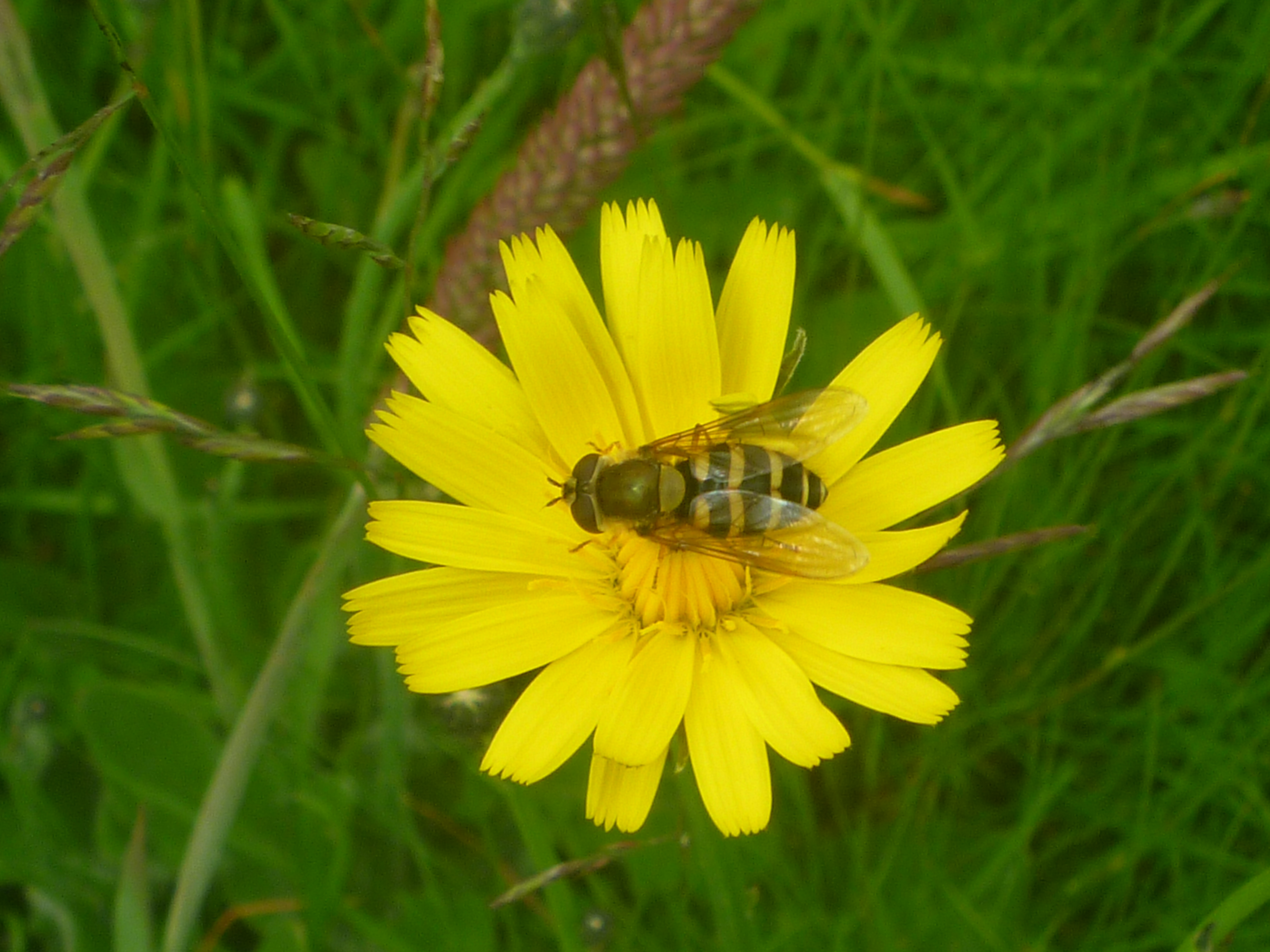
There weren't a lot of pollinating insects around, as it was relatively cool and cloudy while I was doing my survey. However this Banded Hoverfly (Syrphus sp) showed up

I also found a patch of flowers that was later buzzing with a number of bumblebees (mostly Buff Tailed Bumblebees and Common Carders) which I watched for a while, though no photos as they were all moving so fast! 

Around 50 starlings were in the cemetery! They flew around between the trees and shrubs and spent time looking for food in the grass. I enjoyed watching this parent and young fledgling, which inspired today's entry for the International Nature Journaling Week. 

Wildlife Surveying for 30 Days Wild.


Sunday, 5 June 2022

The Return of Edinburgh's Community Festivals!

 The COVID-19 pandemic has meant that Edinburgh's community festivals had been put on hold. This year, although COVID is still with us (no matter what certain people might try to tell you), the community festivals returned. And yesterday's weather was suitably glorious.

Crafty Green Boyfriend and I started yesterday at Corstorphine Fair 

and we continued to the Meadows Festival 

Both festivals include a good range of stalls, including second hand books and clothes and a range of food and drinks. The Meadows Festival is much larger and also includes three music stages. 

The Meadows is a large greenspace and includes the Greening Our Street community garden at the edge of the area used for the festival. 

and finally, here is today's nature journal entry for International Nature Journaling Week, celebrating the beauty of the everyday and featuring a sketch of the very common and often overlooked daisy. 

For 30 Days Wild.


Saturday, 4 June 2022

Blackbird singing for International Nature Journaling Week

 For International Nature Journaling Week, I created a wee collage featuring yesterday's haiku. 

The haiku reads:

blackbirdsong -
the sun emerges 
from the clouds.

**

The sheet music has been rescued from a music book that was in very poor condition, the blackbird has been drawn on scrap paper and the nature journal itself is an old notebook that a friend gave me. 

I realised that I haven't posted here the very first page of my nature journal, so here it is: 

International Nature Journaling Week only lasts for a week (of course!) but as I'm currently teaching a class on nature journaling for the whole month, I'm aiming to keep this journal every day of June. Though I may blog the results less frequently.


Friday, 3 June 2022

Thursday, 2 June 2022

The Birds from my Window - 30 Days Wild

 We live in a very built-up part of Edinburgh, but we have plenty of birds to watch from our window at this time of year. I've often blogged about the swifts who fly around our streets, and we're still hoping they may choose to nest in the new nest boxes we erected this year (though more likely they'll wait a couple of years before they do so). 

One bird that doesn't need a nest box is the lesser black backed gull, a pair of which have nested on a chimney pot across the road for the past few years - they're long-lived birds, so I'm tempted to think it's the same pair. The nest will be difficult to see in the photo below, but is on the chimney pot in the middle of the photo. 

I'll zoom in a little, though even then it isn't entirely clear!

I drew a quick sketch of this gull for International Nature Journaling Week - the text reads - "Lesser black backed gull nesting on a chimney pot. Gulls have nested here for years (the same pair every time?). The vegetation on the chimney pot offers some camouflage for the eggs."

It is always entertaining to watch the chicks once they start to move around, they become quite adventurous very quickly. So that's something we're looking forward to seeing later this year!

The Birds from my Window for 30 Days Wild.


Wednesday, 1 June 2022

30 Days Wild - Visit a new Place

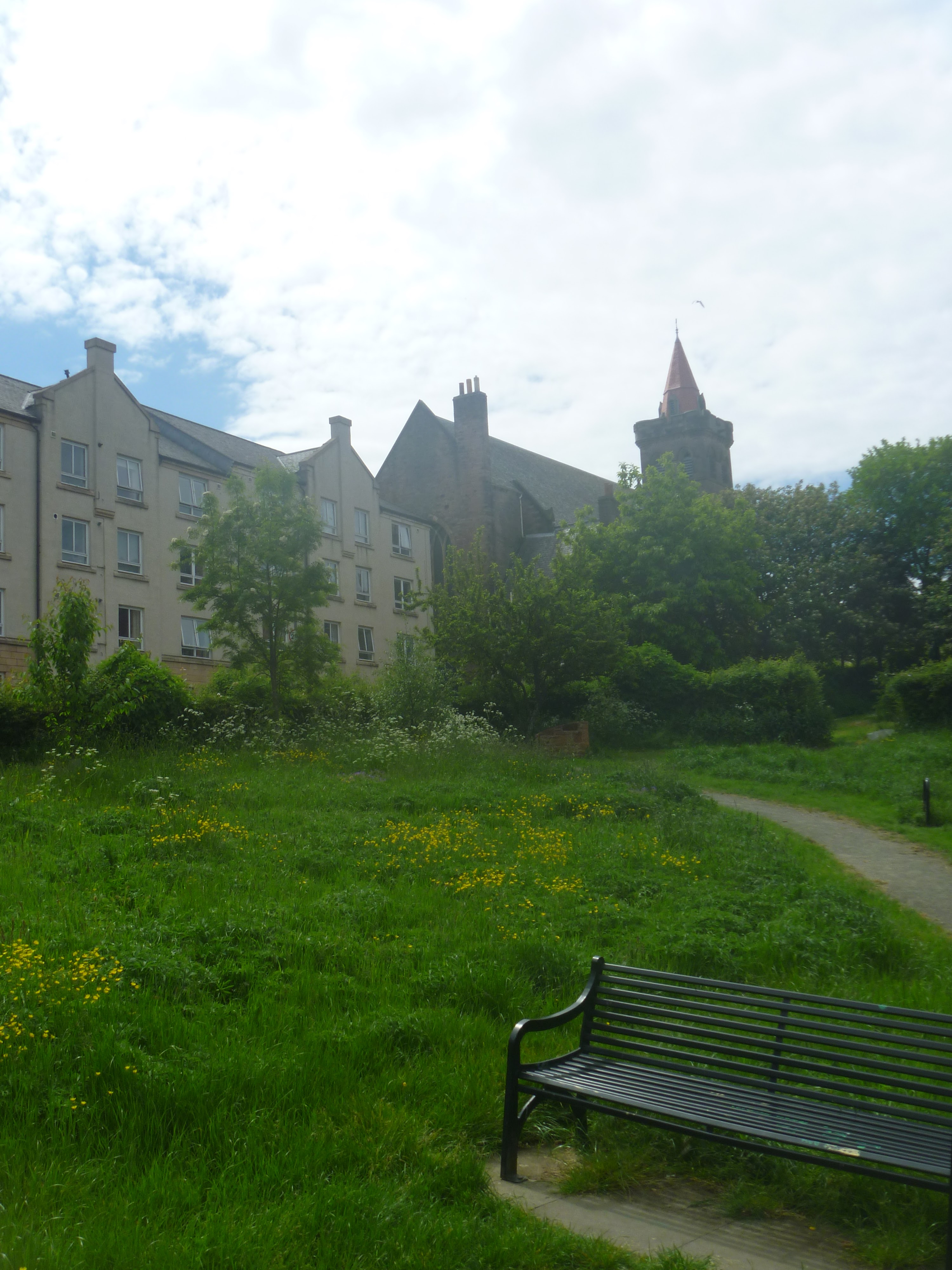
 As part of the Nature Journaling Class that I'm currently facilitating, we visited a small park near Arthur's Seat, Bauks View.  Despite living in Edinburgh for many years, I had never visited this park before, in fact I didn't even know it existed! It's looking beautiful at the moment with the cow parsley and buttercups fully in bloom


It also has lovely views across to Salisbury Crags 

 And as part of International Nature Journaling Week, here's my nature journal entry for the day, showing a red-tailed bumblebee. Written around the bee, are the words 'red-tailed bumblebee flies around the overgrown garden and disappears...' and below the bee are the words 'A sunny day at Bauks View near Salisbury Crags.'

Visiting a new greenspace for 30 Days Wild.