Showing posts with label review. Show all posts

Tuesday, 21 April 2026

An Armsfull of Birds by Cara Benson

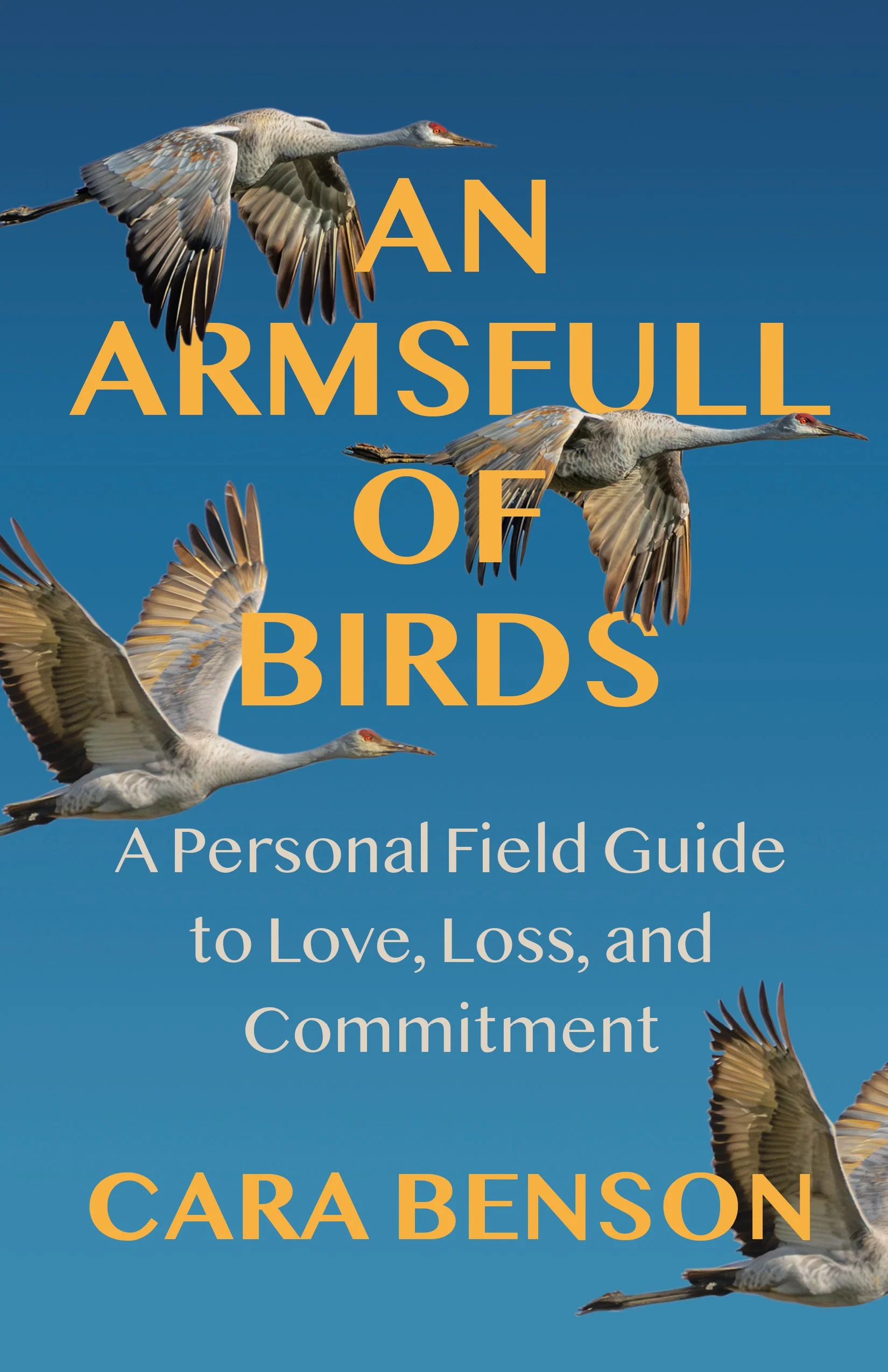
 Book cover with birds flying across a blue background.

Subtitled 'A Personal Field Guide to Love, Loss and Commitment', this is the story of poet Cara Benson's recovery from addiction, her love of the outdoors, her environmental activism, and her long term love affair with Jon, a fellow recovering addict. 

At the outset I thought this would be very much a misery memoir, which isn't a genre I read. However, I was drawn to this book because of the birds and, though there is a lot of misery (the author has not had an easy life at all), the book is overall hopeful and inspiring, as well as being beautifully written, moving and emotionally honest.

Each chapter opens with a brief quote about an aspect of the lifestyle of a particular species of bird, which somehow reflects the aspect of the author's life covered in the chapter. This brings together human life and the natural world in a distinctive, thought provoking way. 

I was very impressed with the author's strength of character. She turned her back on an abusive relationship, committed to sobriety and took up hiking and then mountaineering, braving some incredibly challenging climbs. Later she, with her sister, nursed her mother through terminal ovarian cancer and had to come to terms not only with her mother's death but with Jon's death by suicide. 

After Jon's death, she moved into an old church surrounded by woodland. She was already an environmental activist, but was pushed into thinking more about what she could personally do about the state of the natural world when one of her neighbours started clearfelling the trees on his land. 

This is a moving meditation on love, grief, recovery and our relationship with the natural world - how we need to look after nature but also how the natural world can help us heal:

"We hit the trail early the next morning. The sky was a crisp blue against the white cover of winter. The evergreens were loaded with perfect clumps of snow and rime ice, and we were out there among
them, not another hiker in sight. We trudged in our snowshoes, the path crunching rhythmically under our feet, two souls fully alive for the adventure that our lives had become. Wasn’t this what we’d both
suffered the indignities of withdrawal and the labor of recovery for— to say a hearty “yes!” to it all, as Joseph Campbell, one of the thinkers I’d begun reading in sobriety, had advised?"

 An Armsfull of Birds by Cara Benson, published (19 May 2026) by Simon and Schuster

Disclaimer: I received a free pdf of this book in exchange for an honest review.  

Tuesday, 14 April 2026

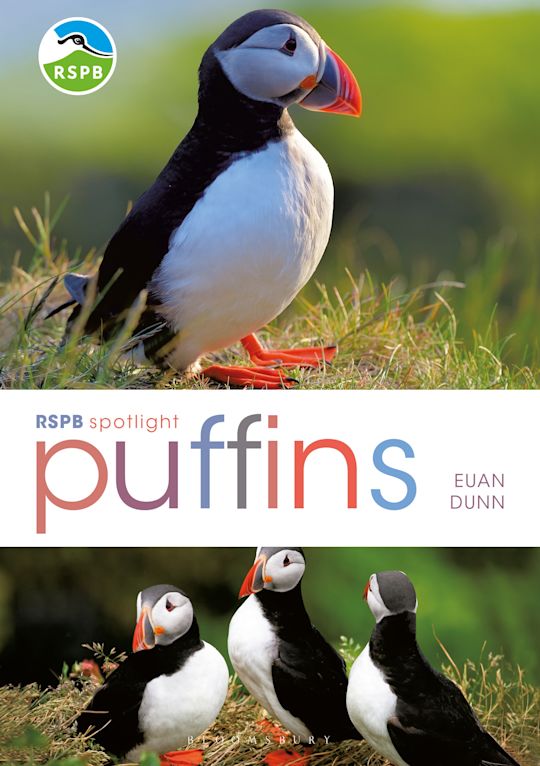
RSPB Spotlight - Puffins by Euan Dunn

 RSPB Spotlight: Puffins cover

 This is a beautiful book taking a close look at the Atlantic Puffin, familiar to many people who have visited the coastal cliffs of the UK among other countries. Illustrated with a wealth of photos, the book looks at vasrious aspects of the puffin's lifestyle from courtship to raising the chicks, foraging for food and colonail living. There are chapters too on the many threats to the puffin, from ocean pollution to overfishing. 

This is a great book for anyone interested in this very charismatic bird species!  An ideal book to review on 14th April - World Puffin Day. According to 2023’s Seabirds Count, the latest seabird census, 23% of Puffins have been lost from the UK in the past 20 years. They now feature on the Birds of Conservation Concern Red List and are at risk of global extinction.  

RSPB Spotlight Puffins by Euan Dunn, published (2014) by Bloomsbury.  

The Wildlife Trusts recently posted an article about folkloric beliefs about puffins, you can read it here.  

**

I'm delighted to have a haiku in the latest issue of Sense and Sensibility. You can read the whole issue here.  

**

A collage of mine has been included in the University of the West of England, Bristol book art exhibition 'The Mountains are Calling'. You can read about the exhibition here and see the artworks on Instagram here. (I'm not on Instagram so can only see a few of the pictures and mine might not be included yet, but will be there by the end of July). If you're in Bristol you can also see all the artworks on display until the end of July at Bower Ashton Library, UWE Bristol.


Monday, 30 March 2026

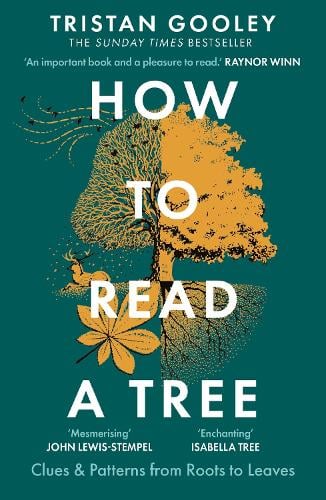
How to Read a Tree by Tristan Gooley

How to Read a Tree (Paperback)

 This is an excellent book from Tristan Gooley, the self styled Natural Navigator. The idea isn't to learn to recognise different species of trees, but to look at how trees grow the environment affects individual trees from the roots to the leaves. We learn how to look at trees in a whole new way and how to recognise, for example, signs that the trees are growing in poor soil or that they've been affected by high winds. 

It's a fascinating book and more elegantly written than earlier books I've read by the same author. I can definitely recommend it if you're interested in finding out more about how trees interact with the world around them. 

How to Read a Tree by Tristan Gooley, published by Hodder (2023).  

Read my tiny reviews of other books by Tristan Gooley:

How to Read Water

The Natural Navigator.  


Monday, 9 February 2026

The Shepherd and the Bear (film review)

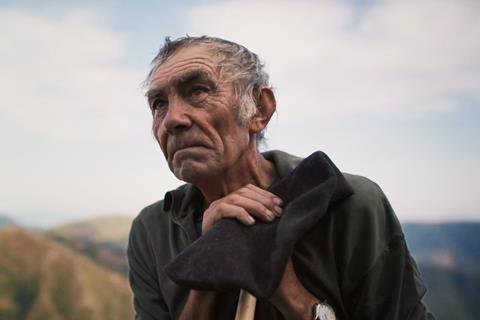
 The Shepherd And The Bear

This documentary explores the conflict provoked by the reintroduction of brown bears in the midst of a traditional shepherding community in the heights of the French Pyrenees. The film follows Yves, an ageing shepherd who struggles to find a successor, and Cyril, a teenage boy who spends his free time tracking and photographing the bears.

The shepherds are losing sheep to bears, which have been reintroduced into the area, with apparently little support given to the shepherds (they are given no compensation for lost sheep and the bear-scarers and electric fences they are given don't really seem adequate to the job). I love the idea of bears being reintroduced into areas where they used to live, but if I were a shepherd in that area I would expect at the very least compensation for lost sheep and sturdy electric fencing to corral the animals at nightime. The arguments of both the shepherds, the photographer and the conservationists are all sensitively presented and the audience is left with a sense that this is a conflict full of nuance and with no easy answers (well except maybe good compensation and sturdy electric fences). 

The documentary doesn't shy away from showing the bloody side of farming, including dying livestock. On the other hand, it is prevented from becoming too heavy with interludes including a wedding celebration and an extended chase scene involving a feisty rooster. 

The stunning cinematography and immersive storytelling show us a world of tradition, community and humanity’s increasingly fraught relationship with a vanishing natural world. 

Currently screening at The Filmhouse in Edinburgh and probably elsewhere, check your local independent cinema.  

Wednesday, 28 January 2026

Polar Corona by Caroline Gill


Polar Corona by Caroline Gill, a winner of the Hedgehong Poetry Prize, is a crown (corona) of seven interlinked sonnets about Antarctic exploration and penguins. The last line of each sonnet becomes the first line of the next sonnet and the last line of the final sonnet is also the first line of the first sonnet, connecting the whole sequence together and underlining the interconnectedness of life at the Antarctic. 

The sonnets display not only well crafted rhthm and rhymes (often half-rhyme) but also occasional effective alliteration:

a wilderness of wind upon a chart,
a sea of storms to keep the watch alert,
a yard of graves to mark the men who died.  

from Crown.  

The sonnets about the penguins are particularly appealing. Often I can imagine them being spoken by David Attenborough over documentary footage: 

The youngsters need to eat to fill out fast;
they peck and jostle for each scrap of food.
Survival instincts may resemble greed,
but soon the time will come to quit the nest.
 

from Birth 

The sonnets here were inspired by a poetry course / residency at the Scott Polar Research Institute and Polar Museum in Cambridge, England. The result is a beautifully produced book containing well crafted poetry that shines a light on the southern-most part of our world. 

** 

Polar Corona by Caroline Gill, published (2025) by Hedgehog Poetry Press  

 To order a signed or unsigned print copy please contact Caroline.

 Further details and purchase of eBook only: Hedgehog Press

**

Meanwhile my latest post has just gone live on my Substack! You can read it here.  


Wednesday, 14 January 2026

Wolf Moon by Arifa Akbar

Wolf Moon: A Woman's Journey into the Night Book Cover

 Subtitled A Woman's Journey into the Night, this is a fascinating and beautifully written book, looking at various aspects of the night, from late night theatre and nightclubs to women's safety, from prostitution to insomnia. There isn't as much about nature as I had hoped there would be, but just enough to justify me reviewing the book on this blog (where my policy is that I only review books that have some connection with nature or environmental issues). 

The author rediscovered her local park during nocturnal walks during the COVID lockdown and discovers how meeting up after dark in parks became a preferred method of socialising for some people she knew. The nature writer Melissa Harrison is quoted as saying that she feels no danger in walking across fields in darkness and that the "satisfaction of an unmediated relationship with the natural world outweighs any potential risks." Towards the end of the book, the author describes her experience on a nightingale walk, visiting a nature reserve specifically in the hope of hearing this iconic noctural songster, and eventually she does: 

"Two nightingales are serenading. The sound is full-throated, effortlessly exquisite, with melodies that are long and lustrous, but then followed by eccentrically jagged harmonies." 

This is a fascinating book about all aspects of night-time, just don't expect to read much about noctural wildlife!

Wolf Moon by Arifa Akbar, published (2025) by Sceptre.  

**

My latest Substack post, all about Scottish Gaelic, Nature and Poetry is now up! You can read it here.  


Wednesday, 17 December 2025

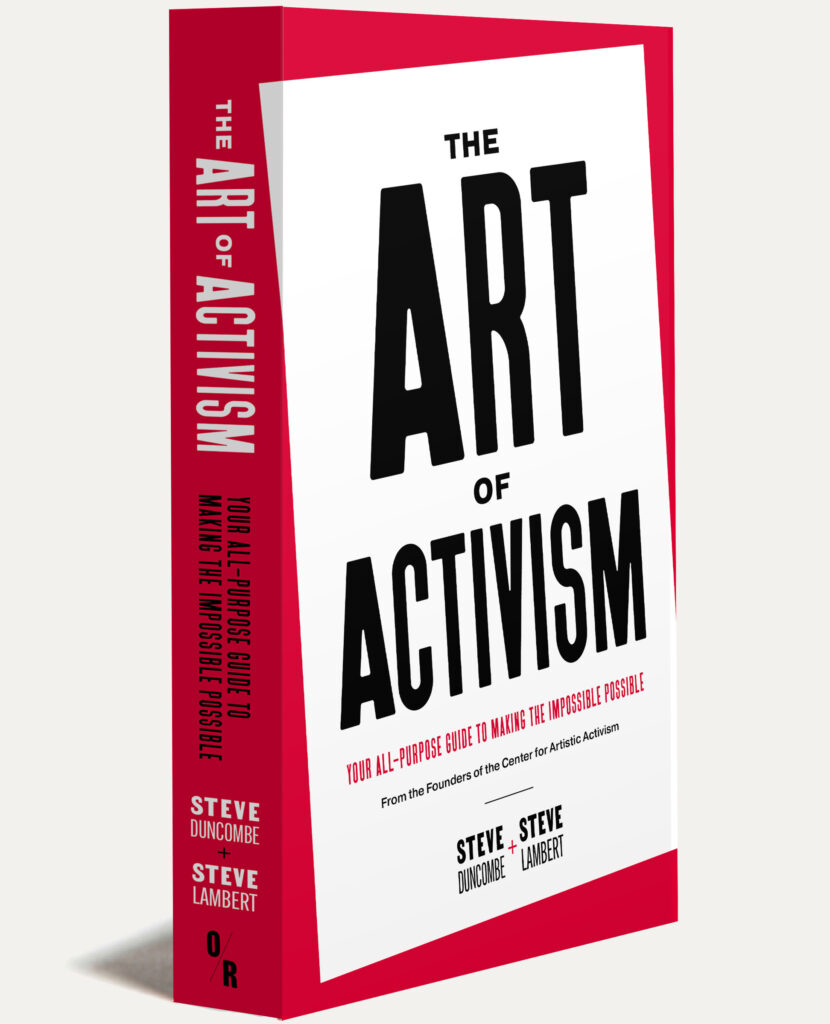
The Art of Activism by Steve Duncombe and Steve Lambert


Subtitled "Your All-Purpose Guide to Making the Impossible Possible", this is a very practical guide to using creative approaches to activism, to achieve concrete outcomes. Creative approaches to activism inspire, energise and engage people who might remain unengaged even after signing petitions or joining a march. The text is accessibly written and accompanied by lots of illustrations, including a surprising number of rabbits!

The book includes a historical overview of artistic activism, including the storytelling of Jesus, the spectacle of the Boston Tea Party and a 1968 action by native Americans to claim Alcatraz Island. The authors also examine some of their own projects, drawing out for example, what a group of American Muslim activists learned from watching the Fast and Furious films. These and other examples are analysed to show why they worked, giving the reader insight into how best to use creative approaches to activism and what pitfalls to avoid.

Case studies include: Undocubus, a bus decorated with pictures of the migratory Monarch butterfly, that tours the USA with riders who have been threatened with deportation, raising awareness of the issues around migration. Project by No Papers, No Fears.  

Journal Rappé, a rap news broadcast in Senegal.  

War on Smog, a performance action in China.  

You can find a whole range of case studies on the Actipedia website

The physical book is supported by an online workbook, which is full of practical exercises designed to make you more creative, whether or not you want to apply that to activism. You can access the workbook here

The Art of Activism by Steve Duncombe and Steve Lambert, illustrated by Steve Lambert, published (2021) by OR Books. Order the free pdf of the interactive workbook here

**

If you're based in the UK, you may be interested in the Wildlife Trusts' Community Hub, which shares inspiration and ideas on how to get involved in community conservation action.


Wednesday, 10 December 2025

The Seed Detective by Adam Alexander

"By the end of the nineteenth century, the USDA (US Department of Agriculture) had recorded a total of 408 varieties of pea being grown commercially. By 1983 the number recorded was just 25, a loss of over 90 percent. This loss of genetic diversity is not unique to the pea. It is happening with all edible crops and poses an existential threat to human survival"

This scenario is the backdrop to Adam Alexander's travels, searching the world for rare varieties of well known vegetables (from asparagus to zucchini), taking seeds home to grow and share, both to enjoy and to preserve them for the future. 

The Seed Detective takes us on a journey starting from when humanity lived as hunter-gatherers up to the present day. Each chapter focuses on a different vegetable and shares the stories of how they became popular, widespread and, on the commercial level, so uniform. Luckily across the world, the author has managed to find wonderful heritage varieties of all these crops and outlines how these varieties are being preserved as well as doing his own bit towards their preservation by collecting and saving their seeds. 

The book looks at various issues around each vegetable. Just taking one example, in Roman times, the Emperor Augustus had a special fleet of ships that carried asparagus around the Mediterranean Sea. Asparagus has been grown in the sourth east of England since the eighteenth century where the soils and weather are ideal for it, however, in Peru where farmers were encouraged to grow asparagus to divert them away from coca (grown to make cocaine) the vegetable is causing drought due to its high demand for water. 

There are many fascinating snippets here: did you know that there is archaeological evidence for pop-corn dating bac 3,500 years?

Throughout the book, Alexander underlines the importance of seed saving - he's an avid collector himself, with 70 varieties of tomatoes in his collection. You can view his seed collection on his website here

Seed saving allows rare varieties to be preserved, ensures stocks of seeds in case of poor harvests and allows crops to adapt to local conditions. Heritage crops are often more resistant to disease and almost always have more taste than commercially grown varieties. 

This is a fascinating book is a plea to preserve all the wonderful heritage varieties of vegetables and is essential reading for anyone interested in botany or the history of our food. 

The Seed Detective by Adam Alexander, published (2022) by Chelsea Green Publishing.  

** 

My latest Substack post is all about winter wildlife. You can read it here.

**

And some excellent news for Swifts in Scotland, "all new buildings over a certain size must include ‘swift bricks’ as part of their design", a change secured by the Scottish Green Party. read more here


Thursday, 27 November 2025

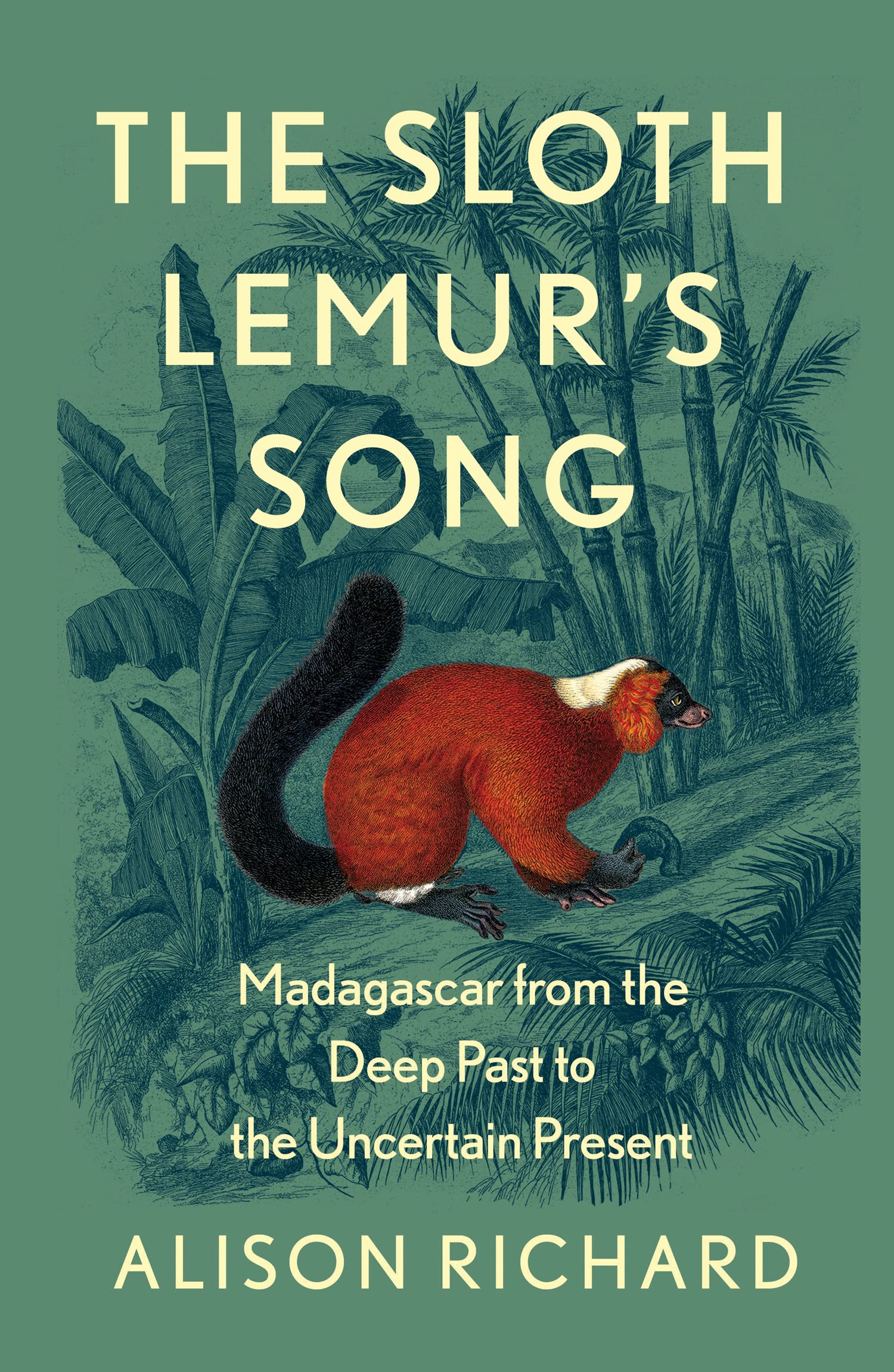
The Sloth Lemur's Song by Alison Richard


Subtitled 'Madagascar from the Deep Past to the Uncertain Future' this is a fascinating overview of the natural history of Madagascar and the relationship that humans have had with nature since first arriving on the island (the first evidence of human habitation dates to around 10,000 years ago). 

Alison Richard has been involved in research and conservation in Madagascar for fifty years and brings a vast amount of knowledge and experience to the book. 

We are guided through the history of Madagascar from the fascinating early animals that have left their fossils here to the current day, where the island is one of the poorest countries in the world and is losing large amounts of its precious rainforests, which are home to a vast array of wildlife found nowhere else, including the around 100 species of the iconic lemurs. Much of the forest loss in Madagascar is due to very poor people having little choice but to clear trees for their farmland. 

Richards makes the important point that a large part of Madagascar has always been grassland and large areas of open space in the country don't all represent areas of destroyed forest. Yet her insistence on this almost undermines her presentation of the actual devastation of the forests. 

A very short chapter, which I felt should have been longer, is dedicated to the fact that some communities are protecting their local forests and wetlands. The chapter gives three brief case studies, including the work being done to protect the areas around the lakes in the west of the island, where Madagascar Fish Eagles are now increasing due to conservation measures that also offer local villagers a sustainable future fishing the lake. 

This is a fascinating book, though at times I did find the writing style awkward. I also expected more lemurs. 

The Sloth Lemur's Song by Alison Richard, published (2022) by Harper Collins.  

 **

Just published today, is this post from the Nature Briefs Substack, about the trade in lemur meat.  

You may also be interested in this recent article about Madagascar's lemurs.  

**

My latest Substack post went live yesterday, you can read it here.  


Thursday, 13 November 2025

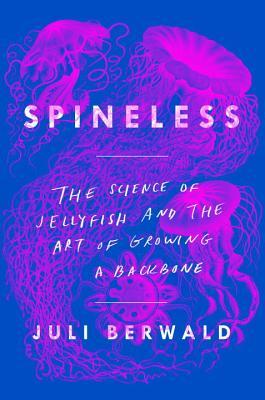
Spineless by Juli Berwald

Subtitled "The Science of Jellyfish and the Art of Growing a Backbone", this is a fascinating look at jellyfish. 

Many people have negative images of jellyfish, as they are well known to cause problems, if their numbers get out of balance, for example, clogging up waterways so that boats can't get through, to causing power outages when they clog up cooling systems. They can also have a negative impact on the catch for many fishing operations, though some species of jellyfish are now becoming desirable catches themselves.  

However, jellyfish are central to many marine ecosystems, and can be entire ecosystems in themselves, offering surfaces for other creatures, such as shrimps to live on and shelter for small fish, who may struggle to find shelter. 

This book takes us on a tour through jellyfish, from ancient times (I was astonished to read that there are jellyfish in the fossil record!) to the current day. Here are details of jellyfish locomotion, bioluminescence and their roles in ecosystems. 

The book later broadens out to look at more general topics around ocean conservation and offers ideas of how individuals can help conserve marine life. 

Blending memoir and science, this is an excellent read for anyone interested in our oceans. 

Spineless by Juli Berwald, published (2018) by Penguin Random House

**

I've just had a tiny poem published on the Smols website, you can read it here.  

**

This week's post on my Crafty Green Poet Substack is all about the sharing economy, you can read it here.  


Thursday, 6 November 2025

The Importance of Not by Dorothy Baird


Dorothy Baird is an Edinburgh based writer, who comes along to one of the writing groups I facilitate. She has published two collections of poetry and this newly published pamphlet was a winner in the 2024 Poetry Space Pamphlet competition. 

It's a beautiful wee selection of poetry about things that are missing, fading memories, lost loved ones, the empty nest and the Sycamore Gap, the last of which is reflected in the cover design by Hanni Shinton. Nature is essential in this collection, from the "squirrel that could clearly run the country / with its problem solving" (You Can't Stand in the Same River Twice) to the "blackbird in his widower's weeds" (Therapy of Vowels), the "otter, the seals and the sleek wheel of a porpoise turning in the blue" (A Small Life Against the Timeline of Everything) and skylarks singing in many poems. 

I was taken right back to my own childhood by "Memories are Lonely things to carry alone" with it's description of a child's den under a rhododendron bush, my childhood den was under a sycamore tree, that has since been removed from the garden I grew up in, just as the poet's rhododendron bush is no longer there. 

 There are moving poems here about her father's dementia and his difficulties coping with the social distancing imposed by COVID-19 lockdowns 

"On the way out, she opens the door
with her sleeve covered hand and smiles
across the distance he wants to close
and she has to maintain, pushing back
against thousands of years of evolution
and the magnetism of family"

Social Distancing 

But in all the grief and sadness, there is always solace and the comfort of nature, and "snowdrops / spread among the stones like small bulbs of hope" in the cemetery (Carpe Diem). 

This is a closely observed, acutely felt and beautifully written pamphlet.   

The Importance of Not by Dorothy Baird published (2025) by Poetry Space

**

My latest Substack post 'Art and Activism', went up yesterday, you can read it here

Monday, 3 November 2025

Autumn Colours over the weekend

 On Saturday we walked round Saughton Park and in between the showers I captured some of the lovely autumn colours on camera


 The cherry trees look particularly beautiful at this time of year, especially when viewed in full sunshine against a clear blue sky  

Yesterday, I met a friend to go to the Resistance exhibition at the National Galleries of Scotland Modern 2 Gallery. Described as  "How protest shaped Britain and photography shaped protest", it covers all types of British protests including environmental protests from early protests against birds being killed so their feathers could be used in hats (a protest which lead to the formation of the RSPB (Royal Society for the Protection of Birds)); the 1932 mass trespass on Kinder Scout, highlighting the lack of public access to open spaces; and the 1971 Friends of the Earth Bottle Dump which protested the withdrawal of returnable bottles by a major drinks brand (you can read an excellent article here, about the legacy of that campaign). So it's well worth catching if you're in Edinburgh (it runs until early January.)

While I was waiting for my friend, I took some photos of the autumn colours in Dean Cemetery, which can be seen over the wall from the grounds of the art gallery


Thursday, 30 October 2025

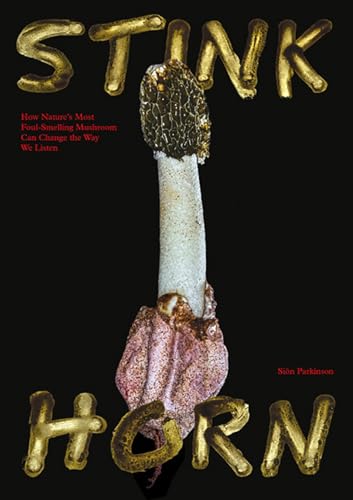
Stinkhorn by Sion Parkinson

 I attended an event at this year's Edinburgh International Book Festival at which Sion Parkinson was speaking and I bought the book after the event. 

This beautifully illustrated book offers a fascinating and often eccentric look at the famously smelly group of fungi known as stinkhorns, a wider look at the relationships between smell and sound and the relationship between bad smells and epilepsy (which the author was diagnosed with a few years ago). The book takes in everything from natural history to the music of John Cage (who himself was fascinated by fungi).

The stinkhorn fungus itself is not only smelly but noisy. The reader's first reaction to that comment might be an impatient 'oh for goodness sake, fungi don't make noises' but "The audible hum in the space surrounding the stinkhorn does not, of course, resonate from the mushroom itself, but is the sound produced by a swarm of several species of fly that are almost always found about it. ... Houseflies hum not with their mouths but with the beating of their wings... in the key of F major. The noisier blowfly Collophora vicina one of the most frequent flies to visit the stinkhorn, flaps its wings at a more bassy .... pitch somewhere between D and D sharp".

This is one of the things I liked most about this book, the way it forces the reader to think about our senses differently. The occasional reaction of 'oh for goodness sake' quickly becomes 'wow, that's fascinating'

Stinkhorn by Sion Parkinson, published by Sternberg Press.  

**

My latest Substack post 'Why Did I study Botany?' is now up! You can read it here.  


Wednesday, 8 October 2025

The Healing Wisdom of the Forest by Anthony D. Fredericks

 The Healing Wisdom of the Forest

Subtitled Timeless Lessons of Renewal, Tranquility and Joy, this is the latest book from Anthony D. Fredericks, professor emeritus of education at York College, in York, Pennsylvania where he taught general science and creative writing courses for 30 years.

The book is prefaced with the author's account of a particularly memorable childhood encounter with a mother deer and her fawn, which sparked his lifelong interest in forests. The remaining chapters share what he has learned over the years from his times in forests, starting from his childhood camping and fishing trips to the John Muir Wilderness in California's Sierra Nevada Mountains. (I myself enjoyed an unforgettable trip to this area too, when I was a child!)

Each brief chapter shares something that the author has learned from time spent in forests, and from the lives of notable individual trees, and then gives us a practical tip for life, a journalling prompt and a snippet to think about. For example, the starting point of observing 'burls' (age related imperfections) on an ancient bald cypress tree, leads to a passage about accepting our own imperfections. The practical exercise in this chapter is to pay close attention to the differences between trees and the imperfections of individual trees; the journalling prompt is to think about your own imperfections more as unique aspects of yourself and the topic to think about is to consider the imperfections of the box elder, whose "Brittle limbs, twisted trunks susceptible to rot, and dull yellow leaves often put this species in the “ugly tree” category."  

Interesting / inspiring quotes from various writers are scattered among the chapters, my favourite (given that I've done wildlife surveys of Edinburgh's cemeteries) being "Forests may be gorgeous, but there is nothing more alive than a tree that learns how to grow in a cemetery." from Andrea Gibson.

I really enjoyed the way that Fredericks used observations from nature as a starting point both for investigating nature itself in greater detail but also thinking about ourselves more deeply and seeing ourselves as being more integrated with the nature we see around us. This dual approach gives this book a particular texture and richness, that gives it an appeal that I don't find in standard self help texts, though having said that, it does become a little repetitive at times in terms of the life lessons offered. 

This book is designed to be read slowly, one brief chapter every week or something so that you can spend time thinking about the lessons the trees (and the author) are offering you. 

The Healing Wisdom of the Forest by Anthony D. Fredericks, published (2025) by  Health Communications, Inc.

Disclaimer: I was sent a free electronic copy of this book  in return for an honest review

Wednesday, 1 October 2025

Infinite Paradise by Dianne Ebertt Beeaff


This memoir follows the seasons over a year, on sixteen acres of wild land along the Conestoga River in Southern Ontario, Canada. The land has been in the author's family for many years and she writes about it with a keen observational eye and a great affection for the wildlife that lives there. 

The author starts by taking the reader on a tour along the river, introducing us to the wildlife and humans that share this place and inviting us to slow down and appreciate the natural treasures that surround us. She obviously knows the land very well, she knows where the raccoons live, where the beavers build their dams, and where the blackbirds nest. She is attuned to seasonal change such that she can tell us things like: "A patch of toothy-leaved herb Robert, its tiny pinkish blooms already nearly done, spreads out in emerald-green beneath a rift in the canopy of young cedars. In a few short weeks, we’ll see the yellow-orange spurred slippers of spotted jewelweed in their place." 

We're then treated to Beeartt's nature diary, starting on 1 March, when snow still lies heavy on the ground through the seasons. She details the weather and the wildlife she sees around her, and includes interesting facts such as: "Red squirrels can even suss out the difference between maple species, singling out those with the highest sugar concentrations." This is followed by an exploration of the history of human use of maple syrup, which I found fascinating (even though I don't like the taste of maple syrup).

This use of nature observations as a way into exploring the ecology, geology, history and cultures of the area, is a real strength of the book, giving the reader a deep sense of the place. She also uses nature as a way into thinking about the divine and the nature of religious belief and for looking at issues such as climate change, pollution and nature deficit disorder. For every month she shares information about the flower (for example, the common Daisy is the flower for April) and possibly more information than we need about the birthstone. 

It's a beautifully detailed book that leaves the reader with the impression that Beeaff would be a great person to have as a walking companion. 

Infinite Paradise by Dianne Ebertt Beeaff published (2025) by She Writes Press  

Disclaimer: I was sent a free electronic copy of this book in return for an honest review.


Thursday, 18 September 2025

Literary Gardens by Sandra Lawrence, illustrated by Lucille Clerc


This beautiful book looks at a number of fictional gardens, selected to offer a range of different types of gardens in different geographical locations and different genres of writing and including the sacred (the ancient Hindi epic Ramayana by legendary poet Valmiki) the famous (such as Alice's Adventures in Wonderland by Lewis Carroll) and the less well known (including Jorge Luis Borges' The Garden of Forking Paths.) Each garden is lovingly recreated in exquisitely detailed paintings by Lucille Clerc, while Sandra Lawrence explores the role of each garden in its particular story and explores the inspirations that might have fed into the author's creation. 

The first fictional garden to be discussed, is unsurprisingly, the garden of Misselthwaite Manor which appears in the 1911 classic The Secret Garden by Frances Hodgson Burnett, who was herself a keen gardener. The garden, that we are told is mostly fictional, and the robin that lives there (based on a robin that Hodgson Burnett befriended in her own garden) serve to enable the protagonist Mary to discover her best self. In contrast, the garden in Philippa Pearce's Tom's Midnight Garden (a book that is forever, in my mind, connected to The Secret Garden by the trope of a child discovering a garden) is closely modelled on the author's own garden. Whether entirely fictional or closely inspired by real gardens, these are well described gardens. The garden in Patrick White's The Hanging Garden. however, is shown only obliquely as if the adults reading the novel aren't allowed to trespass into this garden where the young protagonists play. (This book is now on my wishlist, as I love White's writing, his wonderfully odd style that makes the reader look at things in a different way.) Another garden that is barely described is that in The Garden of Evening Mists by Tan Twen Eng, which uses the garden as metaphor for the impermanence of life. (I now want to re-read this book.) The maze in Larry's Party by Carol Shields is largely inspired by the author's own love of mazes, as is the protagonist's tour of mazes across Europe. The weirdest garden of all must be that of Death in Terry Pratchett's Mort, where everything is black and where shovelling manure may (or may not) turn out to reveal the uttermost secret of time and space. 

The differing responses of characters to gardens is also explored, from Hercule Poirot's discomfort in Agatha Christie's The Hallowe'en Garden and the rabbits' fear of the gardener in Beatrix Potter's Tale of Peter Rabbit. Gardens are often presented as havens, not least in Giorgio Bassani's The Garden of the Finzi-Continis, where the characters find short-lived refuge from the realities of Mussolini's Italy. Another well-used trope is that of the garden gate as a portal, as in H G Wells' story The Door in the Wall, in which the main character repeatedly passes by the door to his dream garden without taking the chance to enter the garden itself. 

As well as the gardens themselves, Literary Gardens looks at plants, including entirely fictional plants (such as the triffids in John Wyndham's The Day of the Triffids), poisonous plants (for example in Nathaniel Hawthorne's Rappaccini's Daughter) and 'world trees' including the Tree of Knowledge from the Bible and Yggrdrasil,from Nordic legend. I was interested to read that Alexandre Dumas' The Black Tulip, set during the historical Dutch tulip mania, set off a quest that is still going today, to grow a perfectly black tulip. 

It's worth giving a good long look at the illustrations. The details are amazing - that really looks like Humphrey Bogart and Lauren Bacall hidden away in the orchid house in the illustration for Raymond Chandler's The Big Sleep and how many bunnies can you find in the illustration for The Tale of Peter Rabbit

Other works mentioned include the short stories The Enchanted Garden by Italo Calvino (whose parents were botanists) and Kew Gardens by Virginia Woolf; Daphne DuMaurier's Rebecca; Elizabeth and her German Garden by Elizabeth von Arnim (Mary Annette Beauchamp); The Chronicles of Narnia by C S Lewis; Sei Shonagen's Pillow Book; My Garden (Book) by Jamaica Kincaid, The House on Mango Street by Sandra Cisneros; The Great Gatsby by F. Scott Fitzgerald and Scene Two of Oscar Wilde's The Importance of Being Earnest.

Not only a wonderfully vivid recreation of a variety of fictional gardens, this book also acts as a themed collection of literary reviews and as a guide on how to use gardens and plants in creating atmosphere in stories. After reading this, you'll not only want to re-read it again and enjoy the paintings, but you're likely to end up with a whole list of other books to read or re-read. 

Literary Gardens by Sandra Lawrence, illustrated by Lucille Clerc, published (18 September, 2025) by Frances Lincoln, an imprint of Quarto

Note: I was sent a free pdf of this book in return for an honest review.  

Tuesday, 9 September 2025

The New Global Possible by Ani Dasgupta

 The New Global Possible bookcover

 Subtitled Rebuilding Optimism in the Age of Climate Crisis, this is a book of informed optimism from the President and CEO of The World Resources Institute, an organization with over forty years of experience at the forefront of the climate movement. The book comes with high profile recommendation, including a foreword from Christiana Figueres, so I was delighted to be asked to review it. The chapters of this book are organized around 6 key themes:

Multilateralism: Countries Can Collaborate
Technology: We Must Innovate for Good
Business: The Limits of Voluntary Action
Justice: It Is Not a Choice
Cities: Laboratories for Change
Economy: A New Growth Story

Using these topics as the basis, this very detailed, impressively researched book explores various aspects of the climate crisis, sharing stories of initiatives that have worked, from the creation of extensive cycling infrastructure in Copenhagen to the large scale use of satellite photography to combat illegal deforestation to the successes of various high-profile international conferences over the years since the establishment of the Intergovernmental Panel on Climate Change (IPCC) in 1988. The author is very good at identifying what is really important, the need for governments to work together, both with other countries but also with civic society and with business. 

The real conclusion is that we need to change the systems we work with, to ensure that we can better address the issues we face. And here is where the optimistic view runs into problems. After reading all the inspiring stories of forward thinking cities, collaborative projects and creative solutions, I was left wondering how we are going to achieve the overall systems change that we need so that these individual beacons of hope can actually act as the basis for a sustainable future across the world. As the author says:

"we won’t achieve our goals unless we fix the overarching economic system that incentivizes pollution, deforestation, and economic inequality. These scourges aren’t glitches to be patched up one by one; they are design features of the very economic system we have developed over centuries."

Are we prepared to dismantle that economic system and if so, do we have any chance of dismantling it quickly enough? 

I found this book both fascinating and hopeful and can definitely recommend it to anyone who is interested in a cuatiously optimistic overview of where we currently stand in relation to the climate crisis. 

The New Global Possible (9781633310667, Disruption Books, published 9 September, 2025


Disclaimer: I was sent a free pdf of this book in exchange for an honest review.

Friday, 15 August 2025

Dwell by Simon Armitage


Yesterday I had the great good fortune to be able to attend Simon Armitage's event at the Edinburgh International Book Festival. The event was actually already sold out, but a friend who had a ticket was unable to attend and had passed her ticket on to me! 

I had already bought the book in the festival bookshop before the event and had read it all while queueing to get into the Spiegeltent where Armitage (the UK's Poet Laureate) was to speak. It's a short book, full of accessible poetry and beautifully presented, with wonderful illustrations by Beth Munro

The book focuses on the places where animals live and was inspired by the Lost Gardens of Heligan in Cornwall. Poems range from haiku to Insect Hotel, which imagines Trip Advisor type reviews from a range of inhabitants: 

"Stopped here overnight on the way to a decaying oak a couple of miles away and ended up hibernating for the whole winter. Would deffo recommend. Dreamland."   

At the event, chaired by Nick Barley (former director of the Edinburgh International Boook Festival and now director of the National Poetry Centre in Leeds) Armitage read from Dwell and discussed his writing process and the state of nature conservation in the UK. 

Some people have commented that the book seems 'slight', which on first glance it might do (though I prefer to think of it as small and perfectly formed). However, the poems in the book have a double life and will themselves dwell in the Lost Gardens of Heligan, in a series of installations around the site, so that people will be able to find poetry as they walk around. 

It was an excellent event and the book would make a beautiful gift for any poetry lover or anyone interested in animal homes. And if you get the chance, visit the Lost Gardens of Heligan and see if you can find the poems in situ!  

Dwell by Simon Armitage, published by Faber (2025)  

Monday, 4 August 2025

Why Do Birds Suddenly Disappear? by Lev Parikian


I first came across Lev Parikian via his excellent Six Things Substack, which includes his 100 Birds posts, which are clearly related to his book Why Do Birds Suddenly Disappear

As a youngster, Lev Parikian was an avid birdwatcher. He also told lies about his birdwatching success.  One hundred and thirty species ticked off on his list? It was really more like sixty. When he turned fifty, he decided to go birdwatching again.  He would aim to see two hundred British bird species in a year. And this time he wouldn't lie.

This book details the author's rediscovery of the joys and challenges of birdwatching. The narrative skillfully blends information with personal anecdote, plenty of humour and vivid descriptions such as this observation of a group of Canada Geese: 

"A squadron of eight birds organising themselves into formation, calling to each other in fervid excitement, a frenzy of organised chaos coming together at the last second as the final goose slots into place. They churn the water and the air, sending their fellow waterfowl scuttling for cover.... I'm struck by the everyday beauty of the spectacle." 

This sighting of a common bird is what really sets Lev off on his ambition to see 200 birds in Britain in one year. Two hundred seeming like a manageable target. So each chapter tells of a month's birdwatching, his visits to various bird reserves around Britain and his meetings with conservationists and bird experts. There's a list of birds seen that month at the end of  each chapter so you can follow his progress as he goes along. He's not just ticking birds off a list though, he's learning about their behaviour, the evolution of flight and birdsong. As a conductor he's particularly interested in music, but admits to finding birdsong challenging (which I think is something most of us can relate to!). 

His enthusiasm always shines through, he's always as delighted to see a common bird as a rarity and has little time for the type of birder who'll ignore a whole flock of lapwings in pursuit of a rarity. He also makes the point that a birder from the 1950s would wonder where all the birds have gone, lapwings nowadays are almost a rarity themselves. 

One of my favourite parts of the book is where he visits Edinburgh and discovers the wonderful place for birds that is the Water of Leith (one of my favourite birding places). 

"The Water of Leith is twenty-five miles long. The odds against there being a dipper on this short stretch must be ooh look, there's a dipper."  

 This is a very entertaining and informative book for anyone interested in birds, particularly anyone who grew up enjoying birdwatching and who has lost the habit. Reading this will definitely make you want to get back out into the field.  

Why Do Birds Suddenly Disappear? by Lev Parikian, published by Unbound.  

.  


Thursday, 3 July 2025

A Single Swallow by Horatio Clare


Swallows are wonderful birds, one of our most familiar summer migrants (though not as common as they once were). 

In this book, the author aims to follow the approximate route taken by a migrating Barn Swallow from South Africa to South Wales. He travels overland and only rarely sees swallows, so the book is mostly about the experiences of travelling across Africa, interwoven with occasional sightings of swallows, details about their biology and habits and the place of swallows in religion, folklore and literature. The author comments on local customs, political borders and environmental degradation (particularly deforestation). 

He notes that birdwatching as we in the UK know it, is a 'luxury' and not something that people across Africa generally engage in, though he does meet some swallow experts and fans along the way and learns some local names for swallow, including Nyankalema the Zambian name which translates as 'the one that never gets tired'. 

Swallows meet with many perils on their journey, including needing to cross the Sahara, storms, collisions with traffic and predation. Yet every year they return to our shores to delight us. 

"they seemed to delight in chaos, charging zig-zag into space, which was at once empty and full, as though playing chicken with physics."

A Single Swallow by Horatio Clare, published (2009) by Vintage.  


A Single Swallow by Horatio Clare, published (2009) by Vintage.