Showing posts with label woodland trust. Show all posts

Friday, 16 April 2021

State of UK Woods and Trees report from the Woodland Trust


ancient beech tree, photo by Nick Turner, for Woodland Trust, used with permission

The Woodland Trust's State of the UK’s Woods and Trees 2021 has just been published and gives a mixed picture of our trees and woods. 

Woodland cover in the UK has more than doubled over the past 100 years, but many of the new trees are non-native. Our native woodlands are in poor ecological condition and woodland wildlife is declining. 

Woodlands are vital. They offer valuable habitats for a range of wildlife, they capture carbon to help reduce the effects of climate change and they offer pleasant places for us to spend time, contributing to positive mental and physical well being. 

Woods and trees in the UK currently face a variety of threats to their very existence. These include climate change, pollution and destroying woodland to make way for so called green infrastructure such as high speed rail links. 

We need to plant more trees and create new woodlands, but even more we need to protect the ones we have. A mature woodland is so much more than the trees, it is home to a wide variety of plants and animals from mosses and lichens growing on the trees, to the birds, mammals and insects that live in the woodland. A plantation of newly planted trees will take years, even decades to create a natural community as rich as that found in a mature woodland. So we desperately need to stop cutting down healthy mature trees and we need to stop destroying mature woodland.

Read the  summary of the report on the Woodland Trust website here and read the full report here.


Friday, 14 February 2020

Show the Love for Nature

Every year around Valentine’s Day, hundreds of thousands of people join in the Climate Coalition's #ShowTheLove campaign for the places, people and life that we want to protect from climate change.

'Home Truths', a new report from the Climate Coalition shows that we can future proof our homes and make them cosier, greener and cheaper to run. To help us get there though, government needs to ensure that all new homes are compatible with a net zero emissions target, help homeowners to make their houses more energy-efficient and improve flood defences in vulnerable areas. 

If you're looking for inspiration on how to reduce your contribution to climate change, you could take the Climate Coalition's quiz, which is designed to help you choose a pledge (or two).

There are many ways to get involved in the campaign, but central to the ethos is the symbolism of the Green Heart. People across the UK and no doubt elsewhere craft green hearts to wear, share and display! You can see the green hearts that I've made in previous years in this post from last year.

It's also important to campaign on both a local and national (and indeed international) level. Many organisations co-ordinate campaigns to save nature and act on environmental issues. You can campaign by joining in demonstrations and other actions or by taking part in online campaigns (as I do with the Woodland Trust on this blog and other organisations too, whose campaigns I often share on social media).

It's also great to get involved with practical conservation volunteering if you've got the time, energy and ability. I love volunteering with Water of Leith Conservation Trust, which looks after one of Edinburgh's rivers. The trust offers a large variety of volunteering tasks ranging from dragging shopping trolleys out of the river to acting as a visitor centre receptionist.

But most important of all in many ways is to get out there and enjoy nature! Visit your local green spaces regularly, take photos, record the wildlife you see and enjoy the fresh air and birdsong.

Figgate Pond, Figgate Park, Edinburgh

Tuesday, 21 January 2020

Emergency Tree Plan


 Blackford Hill, Edinburgh

The world currently faces two major environmental crises; climate change and biodiversity collapse. We need urgent action to prevent irreversible damage. In many countries, including the UK,  massive expansion of woodland can play a huge role in addressing these challenges. 

The Woodland Trust has just produced its Emergency Tree Plan. It's a brief but comprehensive outline of how the UK can increase woodland cover. 

Trees absorb carbon from the atmosphere and so can reduce the climate warming effect of carbon dioxide. Native woodlands offer wonderful habitats for a wide variety of plants and animals that wouldn't thrive elsewhere.

We need to plant more trees, but we need to make sure that these trees are in the right places. Some habitats like peatland are important carbon sinks in their own right and harbour rare species of plants and animals that would not thrive in woodland, so woods should not be planted on peatlands. 

We need to plant good mixes of native tree species, that have been grown from seed in this country (this means we're not importing the diseases that can otherwise come into the country on the roots of seedlings imported from abroad). 

We need to look after the forests and ancient trees we already have and to allow them to regenerate themselves. 

If you believe in the importance of planting the right trees in the right places and in expanding woodland across the UK, please consider joining the Woodland Trust campaign to contact your political representatives. 

If you are in Scotland, please visit this link

In Wales please visit this link

In England, please visit this link

In Northern Ireland, please visit this link

Friday, 22 November 2019

National Tree Week 23 November - 1 December


National Tree Week, which starts tomorrow, is the UK's largest annual tree celebration, marking the start of the winter tree planting season. It's an opportunity to celebrate the place of trees in our lives.

The campaign has its roots in the response to Dutch Elm Disease crisis of the 1960s, which wiped out over 20 million of the UK's most significant landscape trees. People joined in to “Plant A Tree in ‘73” and since then, people have planted trees across the country during this week.

Trees are vital to our health and well being. They make our towns and cities more beautiful and offer shade to shelter under on a hot day, while in rural areas they form a vital part of the landscape. They give us oxygen, store carbon, improve air quality, conserve water, preserve soil, support wildlife and help to tackle climate change.

Current official tree planting targets are not ambitious enough.  We need to plant more trees to help reduce UK carbon emissions and prevent climate change from escalating.

However, they need to be the right trees in the right places. If you want to plant a tree in your garden choose a native tree that will not grow too large for the area of your garden. Some types of habitat should not have trees planted on them, peatlands for example are vital carbon sinks in their own right and are habitats for a whole range of rare wildlife and should not be planted with trees. It's also important to realise that natural regeneration is best, so when aiming to expand an existing area of woodland, it may be better to let the trees produce and disperse their own seeds.

Urban trees are vital, as this article in the Guardian explains. In May this year, Edinburgh council leader, Adam McVey, signed up to the tree charter. It will be interesting to see how this affects the city's attitude to trees. Edinburgh has recently suffered a loss of trees due to them being killed and removed in development projects (including work on the new stadium at Meadowbank , 50 trees being destroyed in Princes Street Gardens for disabled access (disabled access is a good thing of course, but whether so many trees needed to be removed is questionable) and the new roundabout at Picardy Place). Meanwhile down in the north of England, Sheffield in Yorkshire has seen loads of its street trees removed as part of a new street maintenance contract.

The Tree Council are asking people to become Tree Champions and plant trees - you can find out more here.

The Woodland Trust offers free trees for schools and community groups, you can find out more here. They also have pages of Tree Planting Advice.

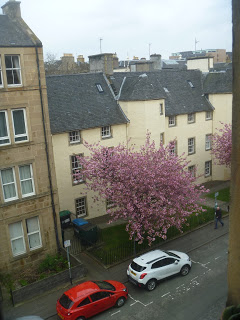
The photos at the top of the article show our local cherry trees in spring and autumn, they are beautiful all year round! 

Wednesday, 25 September 2019

The Big Climate FightBack - Every Tree Matters


Trees are warriors in the battle against climate change.They absorb carbon, reduce flooding and pollution, nurture wildlife and make landscapes more resilient. Urban trees offer shade on hot days and can help people feel better about where they live.

The Woodland Trust are looking for a million people to pledge to plant a tree this planting season, ideally on Tree Charter Day (30 November). 

Before planting your tree though, make sure:


* the tree is suited to the site  - if planting a tree in your garden you don't want it to grow too big 

* the site is suitable for trees - some places offer wonderful wildlife refuges which are damaged if trees are planted there - see my recent blogpost about Kirkconnel Flow in Dumfries and Galloway where lack of management means that trees are encroaching on the peat bog, which is one of the most valuable habitats in the country (and one that also fights against climate change by sequestering carbon).  

So if your site is appropriate for tree planting and your tree is appropriate for the site, then you can make your pledge here.

Monday, 22 July 2019

Edinburgh City Council signed the Tree Charter, now what?

I've blogged before about how Edinburgh Council has mistreated trees and chopped down trees that probably shouldn't have been chopped down (for example did all those trees at Meadowbank need to be destroyed so a new, smaller sports centre with added flats could be built? Did all those trees in Princes Street Gardens need to be destroyed to create a disabled access pathway to the Galleries? Did all those trees at Picardy Place need to be detroyed just so the junction can be made easier for motor vehicles?).

Theoretically this should all change now, as Council Leader Adam MacVey, on behalf of Edinburgh City Council, signed up to the Woodland Trust's Tree Charter in May this year, becoming the first Scottish council to do so. This is obviously to be applauded.

However I wouldn't be the only person to be cynical about this. Just as addressing climate change needs targets to be met not only set, so does signing the Tree Charter need to be backed up with positive action to actually protect trees.

But what do we find? We find that actions in city centre areas continue to compromise the health of trees.

Last year during preparations for the Edinburgh International Book Festival, the trees in Charlotte Square were put under undue stress by being used to prop up heavy materials and by the use of machinery which compacted the soil around the trees. The Woodland Trust  have urged Edinburgh Council to take better care of the trees this year when the Book Festival is set up again in August. Already this year, the big wheel in Princes Street Gardens has already been set up and the inappropriate development around the matures trees has been flagged up by Woodland Trust and other concerned organisations and individuals (see this tweet).

The Woodland Trust are asking the council if one of the tree officers will advise those working on events in the city to respect the appropriate guidance for managing developments around trees during both the set up and take down of any structures.  

The Tree Charter principle on planning greener local landscapes stipulates that planners and developers respect the value of mature trees and the connection between trees and people. 

Mature trees are beautiful, help people to connect with nature and help mitigate the effects of climate change in urban areas. What does the big wheel in Edinburgh's city centre offer that has even half that value? 

So, Edinburgh Council, are you going to actually commit to truly valuing the wonderful trees in our city or was signing up to the Tree Charter just a publicity stunt? 
 

Wednesday, 15 May 2019

Do You Have a Favourite Tree?

Like many people I love walking through the woods and seeing trees and the insects, birds and mammals that live in and around them. It would however be very difficult to choose a favourite, so many of them are so special for different reasons.

But choosing a favourite tree is what the Woodland Trust is currently asking us to do!

It's time to nominate your favourite tree for the Tree of the Year contest.

Your favourite tree may be the most beautiful tree in your local area or the oldest inhabitant of your hometown, a founding figure in your region’s identity, a natural monument in the nation’s story or a tree that is under a particular threat from development.

Nominations are open to any living tree in the UK that has a story to tell. Anyone can nominate a tree and the contest closes on 19 July, so time to get your thinking cap on!

You can find out more and nominate a tree here

Here are just a few of my favourite trees in Edinburgh

 Craiglockart Dell 

 Meadows
Midmar Paddock

Dalkeith Country Park 

Do you have a favourite tree?

Monday, 6 May 2019

Bank Holiday in the Dells

Today being a bank holiday, Crafty Green Boyfriend joined me for my weekly patrol of the Dells alongside the Water of Leith. The weather was mostly dull with a fair bit of rain, but there were still some lovely signs of Spring around.

The hornbeam trees are starting to develop their beautiful chandelier type fruits

These will develop to be their most beautiful in October, as you can see in this post from a few years ago.

Meanwhile the wych elms are covered in more flowers than it seems possible to fit in the available space

 and the horse chestnuts are beautifully in bloom

and the harts tongue ferns are unfurling their shiny new fronds


We were both intrigued to see this patch of wild garlic where some of the leaves are striped

I'm not sure if that is a common occurence, it's certainly not something either of us have ever seen before.

These lovely fungi, growing in one of the recently planted wild flower meadows are, I think, fairy parasol fungi (please correct me if you know otherwise!)

**
The Charter for Trees, Woods and People sets out:

* the role trees and woods play in our lives,

* the rights we all have to the benefits trees and woodland provide, and

* our responsibilities towards maintaining and supporting them.

Each of the charter's principles articulate the relationship between people and trees in the UK in the 21st Century. The Tree Charter Principle for May is Recover Health, Hope and Wellbeing with the Help of Trees and what better way to do that than to go for a walk in the woods! You can find out more about the Tree Charter and sign up to it here.


Tuesday, 16 April 2019

How can we ensure that the new Environment Bill will be best fit for purpose?


view from Corstorphine Hill, Edinburgh


Whether we are outdoor types, nature lovers or not, at the end of the day, we all rely on nature and we need to make sure that wildlife and the wider environment are properly protected.

Yet nature is struggling. Once familiar animals and plants are vanishing from our gardens and countryside. We're pushing species to extinction, changing our climate, generating mountains of waste and polluting our rivers, oceans and even the very air we breathe.

For years, nearly all United Kingdom environmental legislation has come from the European Union (you can read my long blog post about that here). Although not perfect, this legislation has made a huge difference to nature protection and environmental standards in this country.

Although Brexit is currently being delayed until October, it is likely we will leave the EU then and it’s vital that we then still have laws in place to maintain and improve on our environmental standards. The Environment Bill (currently in draft form) is the legislation that will eventually replace the EU rules.

The broad aims of the bill are to:

* Ensure a healthy environment, which people understand and value and feel engaged in and where the impacts we make are effectively managed;

* Ensure equal levels of protection for the environment across the whole of the UK;

* Act as the driving force behind other legislation e.g. future agriculture policy;

* Strengthen the independence and powers of a planned new 'watchdog' (The Office for Environmental Protection).

The details of the bill are yet to be defined and this is where campaigners step in.

The UK government has committed ‘to be the first generation to leave the environment in a better state than we inherited it’. But will this commitment be translated into robust, meaningful action or will we be left with watered down laws and a poorer quality environment?


Greener UK is a coalition of nationwide environmental charities (including the Woodland Trust) that are campaigning to make sure that when it is enshrined in law, the environment bill is bold and effective and will ensure that our wildlife and wider environment continue to be protected. You can find out some of the various ways you can get involved through the coalition here and the Woodland Trust offers a form for you to email your MP here.

This Environment Bill is UK wide but focussed on England. To join the campaign for a Scottish Environment Bill, please go here


Thursday, 4 April 2019

Woodlands are Landscapes Rich in Wildlife - Let's Keep Them That Way

The Woodland Trust first called for a Tree Charter in the United Kingdom in 2015 in response to the crisis facing trees and woods in the UK.

The Tree Charter was launched on 6 November 2017, the 800th anniversary of the 1217 Charter of the Forest (which protected the rights of free men in England to access and use the Royal Forests which had been set aside as the King’s hunting grounds).

You can find out more about the Tree Charter here and sign up to it's principles here.

One of the principles of the Tree Charter is to Sustain Landscapes Rich in Wildlife. This is the theme of the charter for April.

Natural forests and woodlands, especially ancient woodlands that have been continuously tree covered for centuries, are wonderful places for wildlife. The ground is covered with flowers in the Spring before the trees are fully in leaf, offering early food for pollinators. The trees themselves are full of great nesting places for birds, squirrels and invertebrates. The leaves, flowers and fruit of the trees are great food sources for a huge variety of creatures. The trees are valuable for wildlife even after they die, as fungi then grow all over them and invertebrates make their homes in the decaying wood.

It's this wonderful variety of wildlife that makes woodlands like the Dells along the Water of Leith such a wonderful place to walk.


Not everyone values trees though, I've blogged in the recent past about trees being chopped down as part of the process of building a new Meadowbank Stadium in Edinburgh and have just found out that Scotmid have apparently destroyed ten trees in a community garden behind their store in Gorgie Road as part of preparations to build a new store and student flats on the site. The land as far as I know does not belong to Scotmid and it is illegal to chop down trees during the bird nesting season (apparently birds nests were found on the ground after these trees were destroyed). I won't be shopping at Scotmid again (not that I often do). (to object to this development visit the Edinburgh council planning portal http://www.edinburgh.gov.uk/…/view_and_comment_on_planning_… and search for 236 Gorgie Road, click on the application forthat address dated 20 February click on the comments box and then leave your views. Closing date is 8 April).

Further afield and on a larger scale HS2 the high speed rail project will have a devastating effect on ancient woodlands along its route through England. This will destroy irreplaceable woodlands that are rich in wildlife and loved by local people as places to walk and relax. (Read more about HS2 here).

So a Tree Charter that protects woodlands for their wildlife value is vital to the future of our wild places and biodiversity. You can sign the charter here.

****
If you're in Edinburgh on Saturday 13 April, you may want to come along to the Wild Day Out that is happening in Holyrood Park as part of the Edinburgh International Science Festival. Organised by Historic Environment Scotland and RSPB Scotland, there will be loads of activities for all ages and at 10.45 you will be able to join me and one of the park rangers for a guided walk.

Thursday, 21 March 2019

International Day of Forests

Yesterday was International Sparrow Day, World Frog Day and International Day of Happiness, today is International Day of Forests and World Poetry Day!

Woodlands and forests are wonderful habitats for a range of wildlife and offer beautiful, peaceful places for people to wander round. Even a relatively small area of woodland can bring lovely encounters with nature - today I visited Musselburgh and in the small stand of trees near the bird hides (that overlook the lagoons) - I heard my first chiffchaff of the year here as well as seeing chaffinches and goldfinches. Later in the year this area is one of the best places near Edinburgh to see speckled wood butterflies.The male willow trees were delightfully in bloom today too


I love woodlands so much that I volunteer for two woodland organisations! As a volunteer for Water of Leith Conservation Trust, I patrol the wooded Dells along the Water of Leith once a week, picking litter, recording wildlife, noting how many people are out enjoying the area and recording any pollution or vandalism. It's a beautiful place and one I always enjoy visiting.


I also volunteer for Woodland Trust, mostly as a campaigner but I've also lead guided walks round the Dells for groups of people connected with the trust.

I also write poetry inspired by trees, including Corstorphine Sycamore about one of the iconic trees of Edinburgh.


Tuesday, 19 February 2019

Nature's Calendar


Does climate change affect timings in nature?

If you're in the UK, you can join in the Woodland Trust's Nature’s Calendar and help scientists find out about how the changing climate is impacting nature.

From leaf buds bursting to blackberries ripening, the Woodland Trust wants to know what’s happening in nature in your area. By recording your wildlife sightings on Nature's Calendar, you will be contributing to a long biological record that dates back as far as 1736 and helping build a picture of how nature is responding to climate change.

How to Take Part 

To start, look at the list of species and events that you can record. Choose one or more that you can check at least twice a week.

 Choose recording locations that you visit regularly.

 Look out for the seasonal events that happen to your species. Record the date that you first see each event. You can take a photo and add it to your record. You can view your records instantly on the live maps.

You can find out more about how to take part here.

Nature's Calendar helps you to feel more connected to what is going on in nature around you and helps scientists too! 


Friday, 8 February 2019

Show the Love

 Every year around Valentine’s Day, hundreds of thousands of people join in the Climate Coalition's #ShowTheLove campaign for the places, people and life that we want to protect from climate change. This year’s campaign runs from 5-24 February. The Woodland Trust are challenging people to take one action to show your love for woods and trees.

There are many ways to do this of course but part of this campaign is the symbolism of the Green Heart. People across the UK and no doubt elsewhere craft green hearts to wear, share and display!

Here is the heart I decorated for this year, it's a bit of a cheat as the wooden heart had already been painted and I just added some stickers that had come in a stash of crafting supplies I bought in a second hand shop


and these are the green hearts I made for last year's campaign


The wooden heart in the middle is attached to a clothes peg and came in a birthday gift bag of craft supplies, the two cardboard hearts I bought recently from a second hand shop. The beads and thread are from my stash of upcyclable craft supplies. I painted all the hearts with poster paint, which is water soluble.

World Wildlife Fund sent me a green heart as part of this campaign a couple of years ago. It's now permanently pinned to one of my coats and is a little faded but this is what it looked like originally!


 As well as making, wearing and displaying green hearts, you may like to try some of these suggestions from the Woodland Trust about how you can show your love for nature, particularly for trees

Plant a tree – make your surroundings greener, healthier and happier
Record wildlife with Nature's Calendar – share your seasonal observations of nature to help chart the effects of climate change (This is something I should do more regularly. I send my wildlife records to the local wildlife record centre but somehow forget to send them to Nature's Calendar).
Contact your local political representatives and ask them to help protect the things you love from climate change
Sign the Tree Charter – join thousands of others to celebrate and protect trees, and combat threats like climate change

And remember get out there and enjoy nature, it's good for your health and it's great fun and you may even make some new friends like this grey squirrel we met on Corstorphine Hill this lunchtime (when the sun came out between showers)


Monday, 26 November 2018

Save Scotland's Native Woods!


I'm still really on a blog and social media break while I rest my eyes after cataract surgery but this is an important campaign.

The Scottish Government is inviting everyone in Scotland to help write the next national policy for forestry, woodland and trees. A new public consultation offers the people of Scotland the first chance in over a decade to help shape Scotland’s forestry strategy. The results of this consultation will form official guidance and activity around planting, protecting and restoring Scotland’s woods and trees until 2029.
 
Scotland’s native woods and trees are not only beautiful but are vital to our landscapes and wildlife and critical to our future. They should be at the heart of the Scottish Government’s thinking. Help the Woodland Trust give Scotland's native trees and woods a strong, safe future by responding to the consulation via their website here.

The Consultation closes on 29 November.

Wednesday, 25 April 2018

Wood Anemone and Wood Sorrel

Wood anemone and wood sorrel are two of our loveliest Spring flowers and they're both looking particularly beautiful in Colinton and Craiglockart Dells along the Water of Leith.


wood anemone


wood sorrel 


 Both species are also both indicators of ancient woodland. This means that where these flowers grow naturally is likely to have been continuously wooded since 1600 (in England, Wales or Northern Ireland) or since 1750 in Scotland. That the area has been continuously wooded for that length of time doesn't mean that all (or even most) of the trees are that age, nor does it in fact mean that the woodland is entirely natural - the Dells include significant numbers of trees that were planted as ornamental species by the old Estates that used to own the land and a fair number of hornbeams that were planted as their wood was used in the many mills that used to line the river. Ancient woodland though is always a precious habitat, full of species of flowers, fungi and lower plants that aren't found elsewhere. It's also a habitat that is under constant threat from inappropriate development for holiday homes or golf courses and the like.

The UK Government recently took the welcome step of strengthening the protection given to ancient woodland in England in the National Planning Policy Framework (NPPF). It’s a change that should make a lasting difference for England’s last remaining ancient woodland. Unfortunately at the same time the status of individual ancient trees has been downgraded. This seems illogical and is certainly not helpful. You can find out more here and add your voice to the Woodland Trust campaign to give equal protection to ancient woodland and individual ancient trees.


Wednesday, 21 March 2018

International Day of Forests

This year for International Day of Forests the theme is Urban Forests and Sustainable Cities. The urban forest includes all the trees in a city, street trees, those found in parkland and in private gardens.

In the UK urban forests have made it into the news a lot recently, given the shocking fact that Sheffield (once known as a very green city) has been destroying many of its street trees. Gone or threatened are historic avenues of lime trees, monuments to those fallen in the wars and a rare elm tree that is resistant to Dutch elm disease and home to a very rare butterfly. As if this isn't bad enough, those people who have been protesting the tree fellings havebeen treated as criminals, charged in the courts or in some cases injured when police have attacked them in the streets.

It's not just Sheffield though. Edinburgh City Council recently removed all the beautiful trees from Picardy Place so they can improve the traffic flow - the trees were removed almost overnight and with barely enough time for the ink to dry on the so called consultation on the traffic measures. The beautiful trees around Meadowbank Stadium have a very uncertain future under plans to modernise the stadium and use 'excess land' for housing and other developments.

Urban trees provide many benefits to urban communities, from cooling the environment and saving energy, to providing health benefits and building resilience against floods and storms. They should be nurtured and celebrated not destroyed for the sake of traffic.

Trees for Cities is the only international charity working to create greener cities.  Since 1993, they have engaged over 70,000 people to plant over 600,000 trees in urban areas.  They plant trees where they will have the greatest social and environmental impact on local people and their communities.  In London for example this might mean planting trees to clean the air while in Nairobi it may mean planting fruit trees for food.

Woodland Trust protects and creates woodland across the UK, some of their woodlands are near or in urban areas. 

**
I took the photo at the top of the post in the woodland area at Musselburgh Lagoons today. Coincidentally, my poem Traffic was posted today (which is also World Poetry Day) at Plum Tree Tavern.

**
As ever, red text in this post contains hyperlinks that take you to other websites where you can find out more.


Tuesday, 13 March 2018

Help Ensure Our Woodlands are Looked After

Every part of Britain has its own distinct woodlands and cultural heritage associated with trees and woods. They are a valuable and much loved part of our natural heritage. Our woodlands and trees have shaped history, and continue to enrich local culture as well as to support rare wildlife species. Edinburgh has several beautiful woodlands, including Corstorphine Hill, Hermitage of Braid and the Dells alongside the Water of Leith, which are valuable wildlife sites and popular for recreation (and frequently appear in my blogposts!).
 Since 1994 the Woodland Trust has been awarded £30 million from the National Lottery, mostly via the ‘Heritage Lottery Fund’ (HLF).
HLF currently funds the trust's work on 50,000 hectares of ancient woodland urgently in need of restoration – from the Glens of Scotland to Exmoor at the foot of England.
However HLF are currently reviewing their funding priorities and the trust fears ths could mean that in the future they will receive less money for their vital woodland conservation work. 
It's vital that the lottery continues to fund 'natural heritage'. I certainly think of nature as an essential part of our heritage. And all of us, whether we play the lottery or not, love our natural heritage, and we need to ensure that this is reflected in the amount of funding awarded to conservation projects. 
You can join the Woodland Trust's campaign here and respond to the lottery consultation on their future funding priorities. 


Thursday, 25 January 2018

Show the Love

On Valentine's Day, the Climate Coalition run their now annual Show the Love campaign. We all have the power to show the love for the places, people, and life that we want to protect from climate change.

There are many ways to do this of course but part of this campaign is the symbolism of the Green Heart. People across the UK and no doubt elsewhere craft green hearts to wear, share and display! These are the green hearts I've made for this year's campaign

The wooden heart in the middle is attached to a clothes peg and came in a birthday gift bag of craft supplies, the two cardboard hearts I bought recently from a second hand shop. The beads and thread are from my stash of upcyclable craft supplies. I painted all the hearts with poster paint, which is water soluble.

World Wildlife Fund sent me a green heart as part of this campaign a couple of years ago. It's now permanently pinned to one of my coats and is a little faded but this is what it looked like originally!


As part of the Show the Love campaign, the Woodland Trust are asking people to record signs of spring that they notice in the first couple of weeks of February. This is so that the trust can get an idea of the degree to which climate change is changing the seasons. You can read more about this here.
So what do you want to Show the Love for? Comment below for the chance to win one of the cardboard hearts shown in the top photo! 

Sunday, 3 December 2017

Woodland Trust Volunteer of the Year Awards!

Crafty Green Boyfriend and I travelled down to Grantham in Lincolnshire on Friday to attend the Woodland Trust Volunteer of the Year Awards ceremony at the Belton Woods Hotel. I was delighted to have been nominated for one of the awards.

On the Friday we arrived early enough to have a dusk walk through part of the lovely wooded nature trail that runs around the grounds of the hotel.

Yesterday morning we revisited the nature trail to explore it a bit more before attending the event. It's a nice area of mixed woodland


we were tempted to wait to see if a badger would emerge from the hole! We found another hole too, the sett seemed to be quite extensive

 and we were impressed by this little patch of oyster fungi

Less than impressed to see this sign on the fence, but then this is England, not Scotland, where we have the right to roam....


Then we returned to the hotel, scrubbed the mud off our shoes and went to the event

The event consisted of speakers, a three course lunch and an awards ceremony. I was delighted to be shortlisted for the 'Juniper Award' which recognises volunteers who provide their voices to protect and raise awareness of woodlands and the work of the trust in protecting them. It was great to see the videos about the work of the winning volunteers in the various categories, a very inspiring group of people!

So thank you  to the Woodland Trust for a great event to recognise the work of volunteers and  in particular for shortlisting me from such a large pool of inspiring volunteers!

Also thanks to Belton Woods Hotel for being a great venue, the nature trails were a great draw, but also the food is great and the staff  are incredibly helpful and friendly. Though the hotel corridors are a maze!