Pages

Sunday, 23 August 2026

A Small Copper Butterfly on Corstorphine Hill

 Yesterday we had a lovely walk around Corstorphine Hill. One of the highlights was seeing this beautiful Small Copper butterfly, one of my favourites. These are really tiny butterflies with gorgeous colours and markings. They're not uncommon but they can be very elusive, partly because they're so small. This individual was very happy to be photographed, first posing on Ragwort, which is an important plant for many insects

then the butterfly moved to the thistles

We also saw a Speckled Wood 

Buzzards nest in this area, and two were flying above us (not that you can tell they're Buzzards in the photo below!) 

A Raven also flew over, but too quickly to be captured on camera! 

Saturday, 15 August 2026

A Walk at Cramond

 Earlier today we had a lovely walk along the Firth of Forth from Silverknowes to Cramond, passing Cramond island


 The walkway was very busy with lots of people walking, a few people cycling and a lot of dogs. The walk is quite quiet at this time of year in terms of birds, there are lots of gulls and crows but few waders, as they tend to gather here in autumn and winter. We were, however, very happy to see a large family group of Goldfinches, you can see them in the photo below, feeding on the thistle seeds, the adults have red faces, the youngsters lack red faces, and if you enlarge the photo and look very carefully you may be able to recognise the Goldfinch with a partially red face, that is almost (but not quite) an adult). 

For Nature Notes
 

Thursday, 13 August 2026

Not all bees are social!

 When you think of bees, you probably think of honey bees and bumblebees, which are all social insects. However, not all bees are social, most bees in the UK in fact are solitary bees. Yesterday Crafty Green Boyfriend and I attended an excellent Introduction to Solitary Bees event, organised by TWIC (The Wildlife Information Centre). You can read more about it in this week's Substack post.

The photo below shows a female Hairy Footed Flower Bee, my favourite solitary bee! These bees can be seen in Edinburgh's Botanic Gardens in the Spring. 


Sunday, 9 August 2026

Easter Craiglockart Hill and Craiglockart Pond

 Yesterday we had a lovely walk around Easter Craiglockart Hill and Craiglockart Pond. It's quite a steep hill so it's nice that there are a few benches at the top where you can sit and enjoy the views. 

It was lovely to see several patches of Harebells, such lovely, delicate flowers 

We then walked through the pleasant meadow / orchard area 
 

which is in the grounds of Craighouse, which has a long and interesting history, starting from Old Craig House which was built in the 16th Century, through the development of a clinic which later became part of Napier University and is now a housing development, though with plentiful green-space surrounding it. You can see most of the buildings in the photo below 

From there we walked to Craiglockart Pond  

which is next to a lovely wetland area, full of bulrushes and other plants

There are three superficially similar but different flowers growing here, Rosebay Willowherb

the closely related Hairy Willowherb (also known as Great Willowherb) 

and Purple Loosestrife 

Always a lovely area to walk round! 


Thursday, 6 August 2026

Closing my Etsy shop

 It's many years now since I set up shop on Etsy. My first shop was called Crafty Green Poet and sold an eclectic mix of handmade items (mostly jewellery), vintage items and craft supplies. After a few years I decided to split the shop into two and about ten years ago set up Crafty Green Magpie as the shop for the vintage and supplies, Crafty Green Poet then solely selling handmade items. A few years after that, people stopped buying my handmade items - one of my biggest sellers had always been my handmade lanyards, which people totally stopped buying during the COVID lockdown when people stopped going into the office.... So I recombined the shops back into one and Crafty Green Magpie has since then been selling mostly vintage and supplies with the occasional handmade item. 

Anyway, I've decided it's now time to stop selling. My Crafty Green Magpie Etsy shop will close soon after Christmas. You can browse all the items here

Wednesday, 5 August 2026

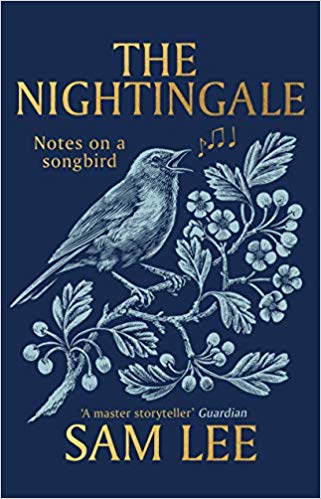
The Nightingale by Sam Lee

The Nightingale: Notes On A Songbird Book Cover 

In many ways this is a wonderful book. It shares the science about Nightingales and their decline in the UK, along with information about conservation successes (he mentions Isabella Tree's excellent book Wilding, which outlines the work she has done with her husband at the Knepp estate, you can read my review of that book here). Lee is also interested in our cultural connections with Nightingales and shares legends, songs, poems and folk tales from across the world. The book ends with a call to the reader to join in nature conservation activities, which, these days particularly, is a vital addition to any natural history book.

Author Sam Lee is a folk singer and has collected songs from communities such as Gypsies and Travellers. he makes the connection between the loss of these traditional songs as the singers die with the loss of the Nightingales' songs in the UK as the species becomes rarer and rarer. 

The book is copiously illustrated with beautiful paintings and line drawings of Nightingales. 

Two things spoiled it for me. I found the author's writing style to be often odd and ungainly (though I know many critics have praised his writing). I also felt there could have been better editing. One painting appears twice in the book and one literary extract that we are promised just never appears. 

Still, it is a book that will probably inspire almost any reader to want to find out more about these wonderful, nocturnal songsters or even to join one of the author's own Nightingale events, where he takes audiences and musicians into the woods to sing and improvise music with Nightingales. (Find out more about these events here).

The Nightingale by Sam Lee, published (2020) by Penguin.

**

My latest post on my Crafty Green Poet Substack is all about wildfires and you can read it here.  

Sunday, 2 August 2026

Arthur's Seat

We always love walking around Arthur's Seat in Edinburgh and it's sad and terrifying how often it's being hit by wildfires these days. The latest fire, which was on Salisbury Crags, adjacent to Arthur's Seat started on 19 July and took days to be put out. it's now out, but the site has been extensively damaged as you can see from the photo below, with the blackened areas on the Crags being a very sobering sight. 


 Luckily we've had a fair amount of rain since the fire was put out, but wildfires are becoming more and more common as climate chaos takes hold (wildfires are still raging in the Cairngorms in northern Scotland and across large areas of France and Spain, to mention just a few.)

We walked our usual route round to Dunsapie Loch, where there were a lot of Canada Geese, a couple of Mute Swans and a few Mallards. 

We were delighted to see this female pheasant with her two chicks 

watched this Kestrel for a while

There were some insects to watch too, including this Common Wasp busily eating a slug  

and several bees, including this Buff Tailed Bumblebee 

The thistles are already shedding their thistledown, which makes for some nice photo opportunities

Hopefully there won't be more wildfires, but rising temperatures and lack of rain make them more likely. If you're out and about in hot, dry weather, don't light fires or use barbecues and dispose of cigarettes carefully. Many wildfires are started by human carelessness and human induced climate change will often make them spread.

Posted for Nature Notes.  

Wednesday, 29 July 2026

Patient Property by Kirsten Cliff Elliot

Patient Property is a collection of haiku and tanka about Kirsten Cliff Elliot’s journey through leukaemia. These poems cover all aspects of her cancer journey, from diagnosis to remission. I particularly noticed how often how she ties her experiences, thoughts and feelings with the natural world. Spiders' webs appear in more than one of these poems:

storm clouds
can hope be caught 
in a spider's web? 
 
The spider's web suggesting the confusion and uncertainties surrounding chronic illness.
 
The compression of language in these short form poems means that so much can be said in so few words, while also encouraging re-reading, which deepens the meaning. 
 
between breaths
following the white
of this butterfly  
 
These poems read in sequence offer a moving insight into Kristen's journey.  
 
The book comes with an introduction from the poet along with a Foreword by Owen Bullock and an Afterword by Patricia Prime.  
 
 
** 
 
Disclaimer: I received a free copy of this book direct from Kirsten in exchange for the last copy of my own poetry book. 
 
**
The latest post on my Crafty Green Poet Substack is all about animal migrations, you can read it here.  


Tuesday, 28 July 2026

Robin's Pincushions

 I was very pleased to find these Robin's Pincushion galls on a wild rose bush today. 


These strange looking growths are galls, caused by the larvae of Diplolepis rosae, a tiny gall wasp. Inside each gall there are lots of grubs, which feed on the gall over the the winter and emerge in spring as adults.

Monday, 27 July 2026

I've been making more postcards!

 A few posts back, I shared some of the postcards I've been making to share through Postcrossing. Here are some more, all made using craft supplies from second hand shops and paper scraps.  


I only send handmade cards to Postcrossing members who specifically say they're happy to receive handmade cards and have a stash of unused vintage postcards that I'm sending to other members. Wondering what to do with the stash of vintage cards is what prompted me to join Postcrossing in the first place! 

Sunday, 26 July 2026

Saughton Park in Edinburgh


Yesterday we had a lovely walk round Edinburgh's Saughton Park which lies alongside the Water of Leith. The bridge over the river at the entrance to the park is often a good place to see Otters, though we didn't see any yesterday! However, the little island in the middle of the river was looking very vibrant with a variety of plants in bloom, including the pink Hairy Willowherb which you can see in the photo below. 

It was cloudy and very windy when we started our walk, but once the sun came out we were happy to see several white butterflies (probably a mix of Small Whites and Large Whites, we didn't get close enough to tell which they were). There were also a reasonable number of bees, including the Buff Tailed Bumblebee in the photo below 

posted as part of Nature Notes.  

Wednesday, 22 July 2026

Between the Echoes by Angus MacMillan

 Book cover of 'Between the Echoes: place-home-Lewis' by Angus Macmillan with a sunset or sunrise over water design.

 A few weeks ago I attended the launch of Angus MacMillan's memoir 'Between the Echoes' which was held at the Scottish Storytelling Centre in Edinburgh. It was a very enjoyable event and I bought a copy of the book, and even spoke haltingly in Scottish Gaelic to the author who kindly signed my book, despite my lack of ability to speak the language (we did lapse into English very quickly). 

I've just now finished reading the book, which is a beautifully written evocation of growing up in Lewis, one of the Hebridean islands where Scottish Gaelic is still spoken and the Gaelic culture still hangs on, though much less so than it did even in the author's childhood. 

The book is divided into sections and looks in turn at memories associated primarily with water, earth, fire and air. The personal anecdotes are well chosen to highlight both the freedom that the author and his friends had in growing up in a rural island community and the strong sense of community where neighbours would regularly visit each other and doors were left unlocked. Also a sense of "feeling at home on the earth":

"being fastened to the world by it's colours and shapes, and the bodily feelings created by the natural world and its contours, in the form of grasses, rocks, mud, water, slopes and hollows. Inanimate things are imbued with life, or given an entirely different imagined existence: lumps of soft peat shaped into birds and planes, sticks transformed into swords; puddles become lagoons for sailing matchstick boats"

The book ends with a chapter entitled 'Of Place and Home' which outlines some of what has been lost.  Many of the Gaelic speaking islanders have left for education or work, and have been replaced by non-Gaelic speaking incomers, which has diluted the central role of the Gaelic language itself. (Tellingly, perhaps, the author himself no longer lives on Lewis.) Culture has changed too, a Gaelic 'ceilidh' used to be an informal gathering of neighbours, where there might be storytelling and music, but now, the ceilidh is a paid for, ticketed event centred on traditional Scottish dancing.

Between the Echoes by Angus MacMillan, published (2026) by Islands Book Trust.  

**

My latest Substack is all about butterflies and birds along the John Muir Walkway, with more detail than in my recent post here. You can read the Substack here.  

Sunday, 19 July 2026

Butterflies and Birds at Musselburgh

We had a lovely day at Musselburgh yesterday. It's always a great place to see birds and at this time of year, a great place to see butterflies. So we went along, hoping to get some good counts for the Big Butterfly Count, which started on Friday. The Big Butterfly Count asks you to spend 15 minutes in one place noting the butterflies and day flying moths you see (the project only focuses on a selected range of species). We spent 15 minutes in each of three different places and saw a total of 65 butterflies and three Six Spot Burnet Moths. Here are some photos:

We saw a lot of Meadow Browns, the photo below shows a female (unusually, in this species, the female is brighter than the male)

lots of Small Skippers (a species not included in the Big Butterfly list of species) 

a couple of Common Blues

and a few Small and Large Whites, which we didn't catch on camera. We got several photos of the Six Spot Burnet Moths 

We saw a good selection of birds, including around fifty Curlew, which was particularly pleasing as these birds are becoming very rare.

We also had a wonderful view of a Stoat, though we didn't get a photo of it, as it dashed away so quickly. 
 

Shared for Nature Notes.  

Thursday, 16 July 2026

The Big Butterfly Count is Here!


Comma butterfly

The Big Butterfly Count has been running for many years now. The idea is to go outside and count butterflies for fifteen minutes! This year's Big Butterfly Count starts tomorrow (Friday 16 July) and runs until 9 August. Find out more and join in at the Big Butterfly Count website. The best times to see butterflies are between 10am and 4pm and you are most likely to see butterflies in warm, sunny weather. 

I survey butterflies throughout the summer at two sites (Lauriston Farm and Corstorphine Hill, both in Edinburgh), but am always happy to go to other places to count butterflies for the Big Butterfly Count. 

The photo shows a Comma Butterfly, one of the species I hope to see during the Big Butterfly Count.  


Wednesday, 15 July 2026

On Time and Water by Andri Snaer Magnason

A couple of weeks ago, I saw the film Time and Water (directed by Sara Dosa), which looks at the life and work of Icelandic writer and environmental activist Andri Snaer Magnason. The film uses family videos and archive photos to make his arguments about the climate crisis much more personal. His family have a close personal connection with ice, his grandparents Hulda and Arni spent their honeymoon on a glacier expedition! 

Having seen the film, I was very keen to read Magnason's book, which, by coincidence or not, was sitting on my bookshelves.  

The book is a much more wide ranging thing than the film. While the film physically remains in Iceland, the book includes Magnason's travels and his meetings with the Dalai Lama. The book also goes into more detail about environmental issues than does the film, while taking in a wider range of subjects including spirituality, that are only touched on in the film. The film is well worth seeing, and if you get the chance, do see it (it seems to have finished its current run in Edinburgh cinemas, but I'm sure it will come back at some point). Whether or not you've seen the film, the book is a must-read.  

The review became longer than my standard book reviews on this blog, so I decided to post it on my Substack, and you can read it here.  

On Time and Water, by Andri Snaer Magnason, translated by Lytton Smith, published (2020) by Serpent's Tail  

Monday, 13 July 2026

I've been making postcards

Last year I had the unenviable task of clearing out a friend's flat after she died (you can read my post about house clearances over on my Substack here). In amongst all her stuff, were loads of unused postcards. I wondered what to do with these until I recently discovered Postcrossing. This website basically links people up to send postcards around the world. It's fun, it keeps alive the old fashioned habit of sending real mail and I also find it a good way of practising my languages (I've written and received a few postcards in German, a couple in French but none so far in Italian and don't expect to ever write any in Scottish Gaelic.) I've got lots of card making supplies and have taken out the card that's the right size, shape and thickness and made some postcards to send, with more on the way no doubt. I may use some of the postcards to send to people outwith Postcrossing. Here are a selection, all made from paper scraps and craft supplies purchased from second hand shops: 


Sunday, 12 July 2026

Moths and Caterpillars on Corstorphine Hill

 We had a lovely walk on Saturday, around Edinburgh's Corstorphine Hill. It was very misty, with a heavy haar (sea mist) hanging over the hill, which was very atmospheric.


Before we even got onto the hill, we saw this beautiful Magpie moth in a hedge

On the hill we were very happy to find plenty of Cinnabar Moth caterpillars munching their way through the Ragwort. I very rarely see Cinnabar moths themselves, but at this time of year, the distinctive orange and black striped caterpillars are easy to find on Ragwort.  

There were also several Red Soldier Beetles in amongst the Ragwort - I haven't seen as many of these beetles as I would expect to see at this time of year.


 This post is part of the Nature Notes meme